For someone considering a home, the area offers a close look at Louisville's older urban housing. Shotgun houses, camelbacks, and other building types sit within a landscape that has continued to change. The useful question is how a particular property fits your needs and its immediate surroundings, rather than whether the neighborhood can be reduced to a single market label.
Homes & everyday life
in Shelby Park.
In a narrow historic home, the arrangement of rooms can shape daily comfort more than the advertised area. Compare access to bedrooms, bathrooms, laundry, storage, and the yard alongside proximity to the park.
Look a little closer.
Inspect the work behind renovations, including structure and major systems. Check parking and the immediate block in person rather than assuming every nearby house offers the same routine.
Tina’s Green Tree home search.
Opens in a new tab.
Get your bearings
The PVA describes Shelby Park as extending south from East Kentucky Street, with railroad corridors along its eastern and southern edges and I-65 to the west. Smoketown, Germantown, and Old Louisville are nearby but distinct neighborhoods.
The park itself is at 600 East Oak Street. Using that address and Logan Street Market as reference points makes it easier to understand the relationship between residential streets, commercial activity, and public space. PVA neighborhood guide, Shelby Park visitor information
Sights to see and things to do
Spend time in Shelby Park
The park provides walking paths, courts, play areas, fields, shelters, and seasonal sprayground facilities. It is a good starting point for understanding the neighborhood because it functions as everyday public space as well as a setting for organized events.
Choose the visit around your interests: a walk, a court activity, or a playground stop. Check current programming and seasonal operations before planning around a particular facility. The park's character is best appreciated by spending time there rather than simply driving past its boundary. Olmsted Parks Conservancy: Shelby Park
Explore Logan Street Market
Logan Street Market, 1001 Logan Street, brings independently operated food and retail businesses together under one roof. It is a useful choice for a group with different tastes and a place to browse between meal stops.
The operator describes a year-round market with individual merchant spaces and event programming. Its visiting information also explains the lot location, street parking, accessible entrance arrangements, and lift to the second floor. Check the current merchant list and hours for the particular business you want to visit; a market-wide schedule does not guarantee identical hours for every tenant. Logan Street Market visiting information
Discover Idlewild Butterfly Farm
Idlewild Butterfly Farm, 1100 Logan Street, offers a distinctive connection to insects, pollinators, and gardening. Its shop includes plants and educational or insect-related items, and its outdoor flight house and gardens are described as seasonal, generally May–October.
There is an important current planning detail: the visitor page says insect tours will resume soon, rather than confirming an active regular tour schedule. Contact the farm or check its updates before making a lab or insectarium tour the purpose of your visit. Workshops and the outdoor season also have their own schedules. Idlewild visitor information
Learn about the Louisville Tool Library
At 1227 Logan Street, the Louisville Tool Library offers a community lending model for household and project equipment. It is a volunteer-run nonprofit whose members can borrow items on a seven-day cycle, with annual membership based on a sliding-scale donation.
For residents, this is a practical neighborhood resource rather than a conventional tourist attraction. Someone tackling an occasional project may be able to borrow a tool instead of buying and storing one. Check membership terms, the available catalog, and opening times before relying on a particular item. Louisville Tool Library
Look closely at the residential streets
The PVA describes a mixture of shotgun and camelback houses, foursquares, and bungalows. A short walk reveals variations in porch forms, rooflines, masonry, and how buildings sit on their lots.
Choose a manageable route between the park and nearby businesses, using public sidewalks. The interest is in the whole streetscape as well as individual buildings. Houses and gardens remain private spaces, even when they are part of an architecturally interesting block. PVA housing overview
Community resources and activity
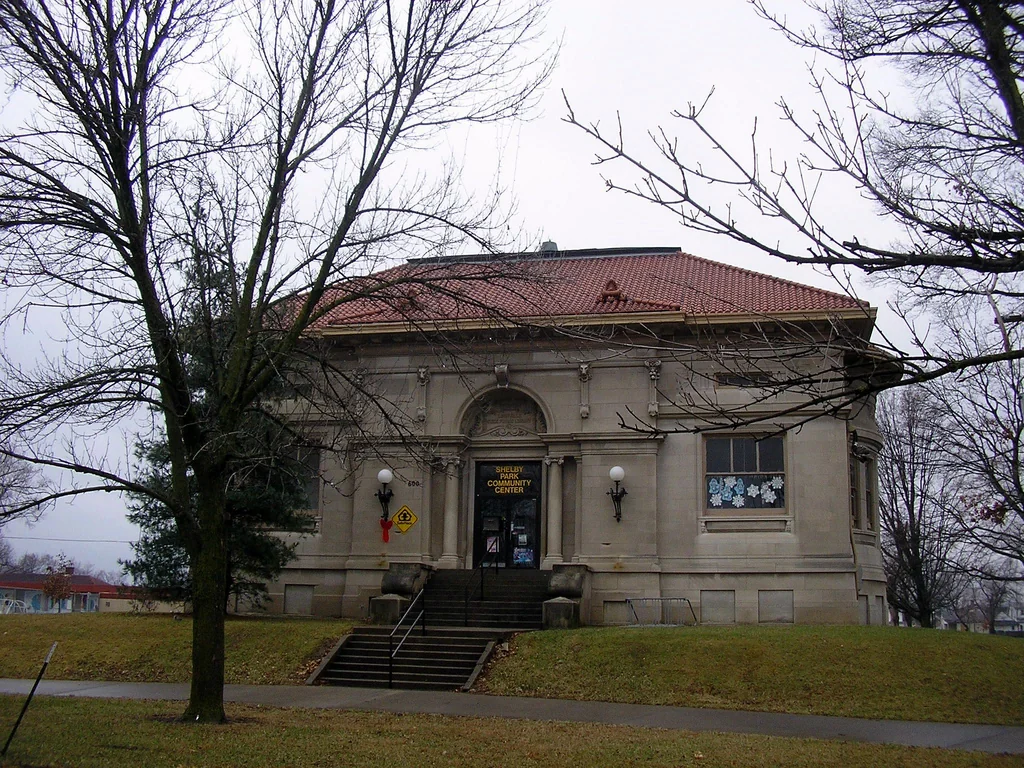
In February 2026, Louisville announced that The Book Works had moved to the Shelby Park Community Center. The nonprofit provides free educational advocacy and support for young people, including middle and high school students experiencing disruptions in their schooling.
This is another chapter in the historic building's educational role. People seeking services should use the organization's current contact and referral process rather than treating it as a drop-in museum or general library service. City announcement: The Book Works at Shelby Park
The neighborhood association is also a useful starting point for local involvement. Community organizations and businesses offer a fuller view of Shelby Park than property listings alone, particularly for understanding current projects and opportunities to participate. Shelby Park Neighborhood Association
Real estate and housing character
Evaluate layout before finishes
In a narrow historic house, room arrangement can have a larger effect on daily comfort than the advertised square footage. Walk through the route between bedrooms, bathrooms, kitchen, and outdoor space. Consider privacy, storage, furniture placement, and whether any room must serve as a passageway.
A camelback's rear upper story or another addition may provide useful extra space, but examine the stairs and connections carefully. Ask what work was completed and whether permits and records are available. A visually attractive renovation should still be evaluated as a building with a history.
Inspect maintenance and site conditions
Review roof condition, exterior masonry or siding, drainage, foundations, and major systems. Ask which improvements addressed underlying maintenance and which were cosmetic. Examine the transition between original construction and later additions.
Outside, confirm property lines, access between buildings, and the parking arrangement. If there is a rear space or garage, drive or walk the actual access route. Think about how you would maintain the yard and move bins, bicycles, or equipment without assuming that all outdoor space is equally convenient.
Understand historic status correctly
The city's project page explains that National Register listing itself does not impose property restrictions and may create opportunities to investigate rehabilitation tax-credit programs. It does not mean that permits, zoning, an individual landmark designation, or other requirements can be ignored.
If a renovation is central to the purchase, verify the specific parcel and project with the relevant city staff. Eligibility for any incentive depends on the property and work; it should not be assumed from the neighborhood name. City explanation of National Register status
A useful first visit
Start at the park, then choose a meal or browsing stop at Logan Street Market. Add Idlewild only after checking the current access available for the activity you want. Walk nearby residential blocks, and return to a prospective home at another time of day. Observe traffic, nearby business activity, railroad sound where relevant, and parking at that exact address. The best assessment combines Shelby Park's public spaces and community resources with the details of the home itself.
Before you make a move.
Schools, ownership costs, and the questions to bring to a home tour.
Where should I start a home search in Shelby Park?
In a narrow historic home, the arrangement of rooms can shape daily comfort more than the advertised area. Compare access to bedrooms, bathrooms, laundry, storage, and the yard alongside proximity to the park. Start by choosing which of those priorities matters most, then compare properties with similar condition, setting, and ownership responsibilities.
How do I check the schools for a particular home?
Use the exact address to identify the responsible district, then confirm the school for each grade and the year you plan to enroll. A nearby school or a community name in a listing is not an attendance assignment. Ask the district about enrollment and transportation for your situation.
JCPS School FinderHow should I compare prices and monthly costs?
Ask Tina for recent comparable sales matched to the home’s location, condition, size, and land. For monthly planning, include taxes, insurance, and any association fees alongside the mortgage, then allow for utilities, repairs, and ongoing maintenance. Obtain estimates for the property you are considering.
CFPB guide to ownership costsWhat should I do during a first property visit?
Inspect the work behind renovations, including structure and major systems. Check parking and the immediate block in person rather than assuming every nearby house offers the same routine. Also make the trips you would repeat during a normal week, at the times you would use them. The suggested first visit in this guide introduces local places; a home tour should test your everyday routine too.
Can I make changes after buying?
Before budgeting for an addition, exterior renovation, outbuilding, or different use, identify the property’s jurisdiction and ask the responsible planning office about the project. Review recorded restrictions and association documents where applicable. For an older home, also establish whether historic-district review applies.
A few places to compare.
Explore another community, then talk with Tina about how the homes and daily routines fit your plans.
Follow along.
Local listings, market updates, and open houses.