It is a place best understood through an ordinary neighborhood visit rather than a checklist of major monuments. Walk a few blocks, stop at a local business, and notice how houses, porches, gardens, and commercial corners fit together. For a home search, that same close attention helps distinguish a property that photographs well from one that works for your everyday life.
Homes & everyday life
in Germantown.
Room arrangement is an important distinction in Germantown. A shotgun-style house with rooms in sequence may function differently from a newer hallway-based plan even when the advertised area is similar.
Look a little closer.
Walk through the home as you would use it: bedroom privacy, bathroom access, storage, laundry, and outdoor connections. Check parking and renovation documentation as carefully as the visible finishes.
Tina’s Green Tree home search.
Opens in a new tab.
Get your bearings
The PVA's neighborhood guide places Germantown generally between East Breckinridge Street, Barret Avenue and St. Michael Cemetery, Goss Avenue and Eastern Parkway, and the railroad corridor to the west. Businesses and real estate listings also use “Germantown” more broadly for nearby areas.
Schnitzelburg, Shelby Park, and Paristown have their own identities, even though local outings and conversations often group them together. This guide includes some clearly identified nearby destinations because they are useful parts of exploring the area. PVA City Central neighborhood guide
Sights to see and things to do
Take a residential architecture walk
Choose a manageable route around the streets near Goss and Ellison avenues, paying attention to the relationship between buildings and narrow lots. Look for differences in rooflines, porch details, brickwork, and rear additions.
The PVA identifies shotgun and camelback houses as prominent forms in Germantown, along with other house types. A camelback's additional rear upper story can be a useful detail to spot. These are private residences, so enjoy the streetscape from public areas and avoid entering yards or photographing into windows. PVA housing overview
Explore local food and gathering places
The wider Germantown–Schnitzelburg area mixes established businesses with newer dining concepts. Louisville Tourism highlights places such as The Post, Hammerheads, and Check's Café, each offering a different reason for a meal stop.
Choose according to your interests and check the business's current hours and menu. The point of an outing here is often to enjoy a particular neighborhood place, rather than to cover a long list in one trip. Remember that some businesses promoted under the wider Germantown name are in neighboring Schnitzelburg or another adjacent area. Local dining overview
Look at the mill's reuse from Goss Avenue
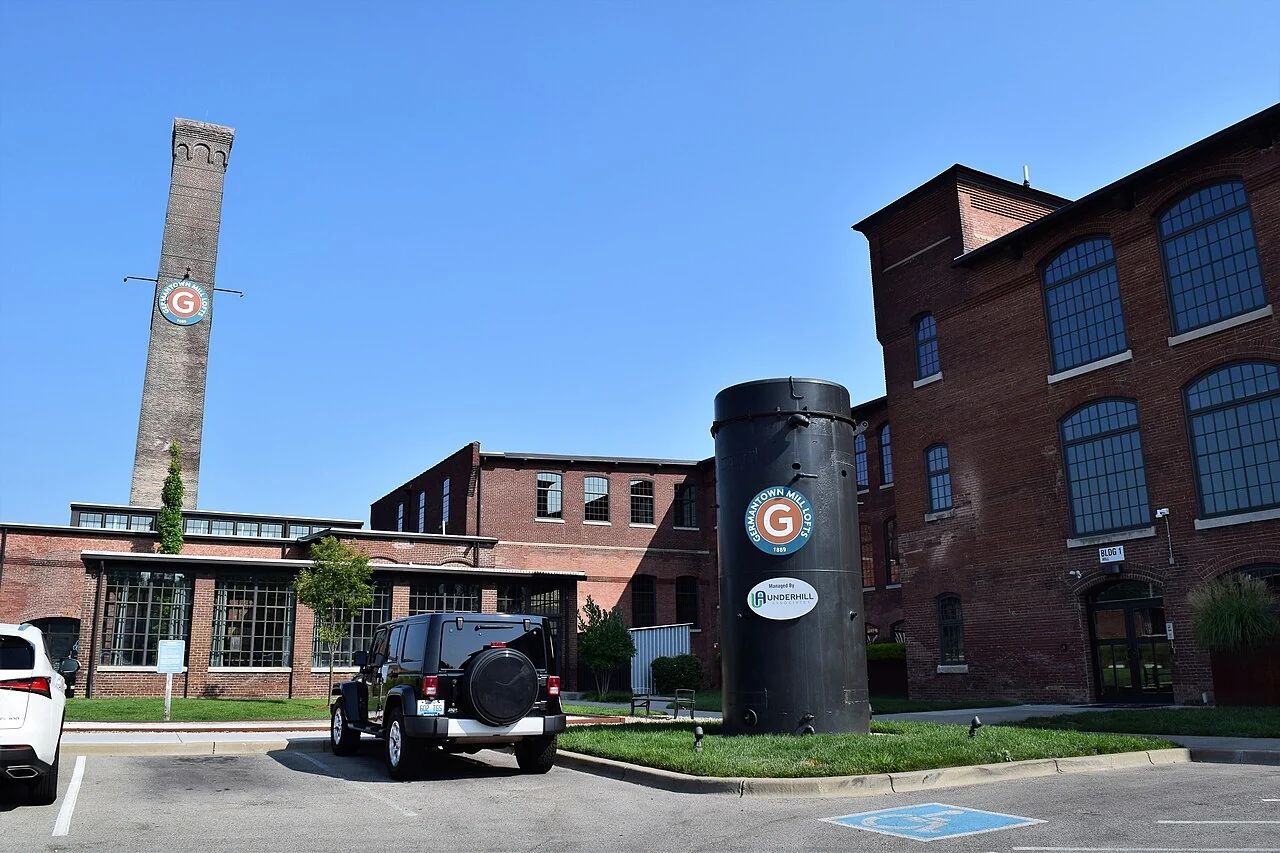
The Mill Lofts property is worth noticing for its industrial-to-residential transformation. Its operator says the renovation was completed in 2016 and also advertises an unusual housing feature: three converted caboose apartments, each approximately 330 square feet.
These are residences, not public museum exhibits. Appreciate the complex from public areas; arrange an appointment if you are interested in leasing and want to see a unit. The cabooses are a distinctive local housing fact, but current availability must be checked directly. Germantown Mill Lofts
Check neighborhood events
The German-Paristown Neighborhood Association provides a connection to community activity. One timely example is Shotgun Fest, announced by Louisville for October 17, 2026, from 3–10 p.m., at the St. Therese parking lot, 1101 East Kentucky Street.
The city describes its return after more than a decade, with live music, vendors, food, and beer, and free public admission. That date is specific to the 2026 event; it should not be assumed to be an established annual schedule for future visits. Shotgun Fest 2026 announcement
Add a nearby Paristown stop
For a longer outing, neighboring Paristown offers additional shopping and entertainment. Its visitor information includes Fleur de Flea, a permanent indoor vintage market, alongside other businesses and venues.
Treat Paristown as an additional destination with its own event calendar and access arrangements. Pairing one stop there with a Germantown walk can provide a broader view of this connected part of Louisville without confusing the neighborhoods' identities. Paristown visitor information
Real estate and housing character
Floor plans matter in compact historic homes
A shotgun-style house may have rooms arranged in a sequence that works differently from a newer hallway-based plan. Walk through the house as you would use it, considering bedroom privacy, bathroom access, furniture placement, and the route to the yard.
For a camelback or another expanded house, examine the stairs and the relationship between original and added spaces. Additional square footage is most useful when its layout serves your needs. Ask about the history and permits for major work rather than relying on the appearance of fresh finishes.
Inspect the less visible parts of a renovation
Request information about roofing, foundations, drainage, electrical work, plumbing, and heating and cooling. A renovated kitchen does not answer those questions. Pay attention to the transition between older construction and additions, especially where rooflines meet.
At the exterior, consider access between closely spaced buildings, rear parking arrangements, fences, and outdoor maintenance. Confirm what belongs to the property and how it is reached. A driveway, alley space, or garage should be evaluated for actual usability rather than simply checked off a listing's feature list.
Compare houses and lofts on their own terms
A detached house and a mill apartment can offer different forms of character. The house may provide a private yard and direct control over maintenance; the apartment may offer shared amenities and management of building systems.
Compare total costs, sound transmission, natural light, storage, parking, and outdoor access. For a rental, ask for all recurring fees and the full lease terms. For a condominium, review association finances and responsibilities. Do not use one building's advertised rent or one renovated sale as a stand-in for the entire area's market.
A useful first visit
Begin with a short housing walk, pass Gnadinger Park, and choose a meal or shopping stop. Look at Goss Avenue and the mill conversion, then return to any prospective home at another time of day. Check how nearby businesses, the railroad, traffic, and parking affect that exact address. Germantown's compact scale is part of its appeal, and careful block-level observation is the best way to understand what living there would mean for you.
Before you make a move.
Schools, ownership costs, and the questions to bring to a home tour.
Where should I start a home search in Germantown?
Room arrangement is an important distinction in Germantown. A shotgun-style house with rooms in sequence may function differently from a newer hallway-based plan even when the advertised area is similar. Start by choosing which of those priorities matters most, then compare properties with similar condition, setting, and ownership responsibilities.
How do I check the schools for a particular home?
Use the exact address to identify the responsible district, then confirm the school for each grade and the year you plan to enroll. A nearby school or a community name in a listing is not an attendance assignment. Ask the district about enrollment and transportation for your situation.
JCPS School FinderHow should I compare prices and monthly costs?
Ask Tina for recent comparable sales matched to the home’s location, condition, size, and land. For monthly planning, include taxes, insurance, and any association fees alongside the mortgage, then allow for utilities, repairs, and ongoing maintenance. Obtain estimates for the property you are considering.
CFPB guide to ownership costsWhat should I do during a first property visit?
Walk through the home as you would use it: bedroom privacy, bathroom access, storage, laundry, and outdoor connections. Check parking and renovation documentation as carefully as the visible finishes. Also make the trips you would repeat during a normal week, at the times you would use them. The suggested first visit in this guide introduces local places; a home tour should test your everyday routine too.
Can I make changes after buying?
Before budgeting for an addition, exterior renovation, outbuilding, or different use, identify the property’s jurisdiction and ask the responsible planning office about the project. Review recorded restrictions and association documents where applicable. For an older home, also establish whether historic-district review applies.
A few places to compare.
Explore another community, then talk with Tina about how the homes and daily routines fit your plans.
Follow along.
Local listings, market updates, and open houses.