Homes & everyday life
in Old Louisville.
Compare single-family houses, condominiums, and homes within converted historic buildings separately. Grand houses along the central numbered streets and more modest homes farther east and west offer different space, upkeep, and ownership choices.
Look a little closer.
Study room layout, stairs, parking, and the condition of roofs, masonry, windows, and major systems. For a condo, review shared responsibilities; for exterior changes, establish the property's preservation-district status before planning the work.
Tina’s Green Tree home search.
Opens in a new tab.
Get your bearings
Old Louisville sits just south of downtown. The American Planning Association describes the broader neighborhood as approximately 1,200 acres between Broadway, Cardinal Boulevard, Ninth Street, and Interstate 65. That description is not identical to the city's preservation-district boundary; check the city map when researching an individual property. Neighborhood profile · Preservation district
Despite its name, Old Louisville developed as a suburb in the 1870s. Today, more than 40 blocks of Victorian-era houses, mature trees, and small courts make it rewarding to explore on foot. Louisville Tourism describes it as home to the country's largest collection of restored Victorian homes. Louisville Tourism
Sights to see
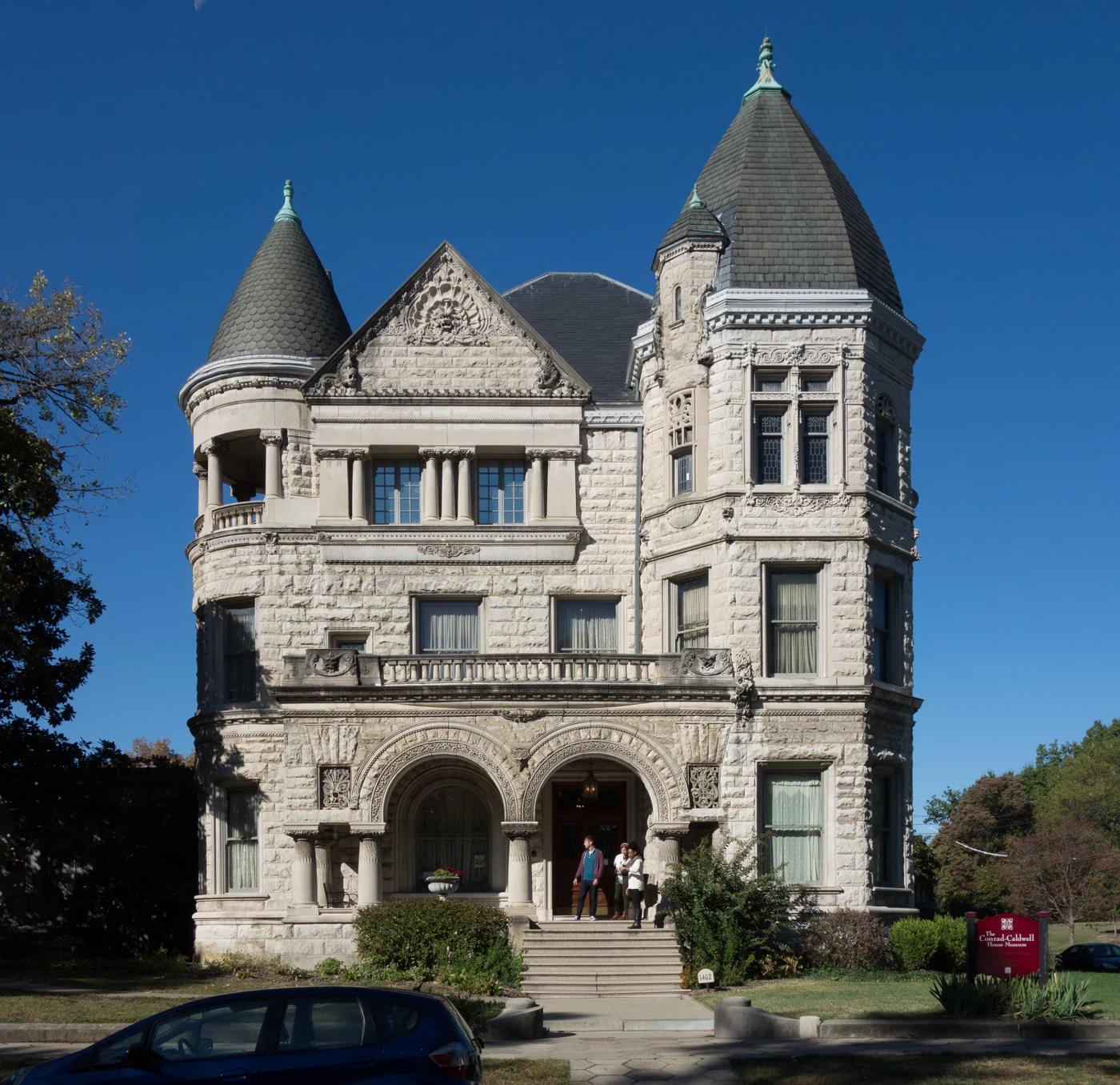
1. Conrad-Caldwell House Museum
Address: 1402 St. James Court, Louisville, KY 40208.
Built in 1895, this Arthur Loomis-designed house is a striking example of Richardsonian Romanesque architecture. Its nickname, Conrad's Castle, makes sense when you see the heavy stonework, rounded arches, and towers. Look closely for gargoyles, ornamental carving, and stained glass.
Inside, seven types of hardwood, parquet floors, and elaborate woodwork show the expense invested in the home. It also had indoor plumbing and electric lighting—modern conveniences for its era. The museum interprets the Edwardian period through its interiors and furnishings, including some original pieces. This is the stop for seeing inside a grand Old Louisville house. Check the current tour calendar before visiting. Museum history · Tours and address
2. St. James Court and its fountain
Location: St. James Court at Fountain Court, Louisville, Kentucky.
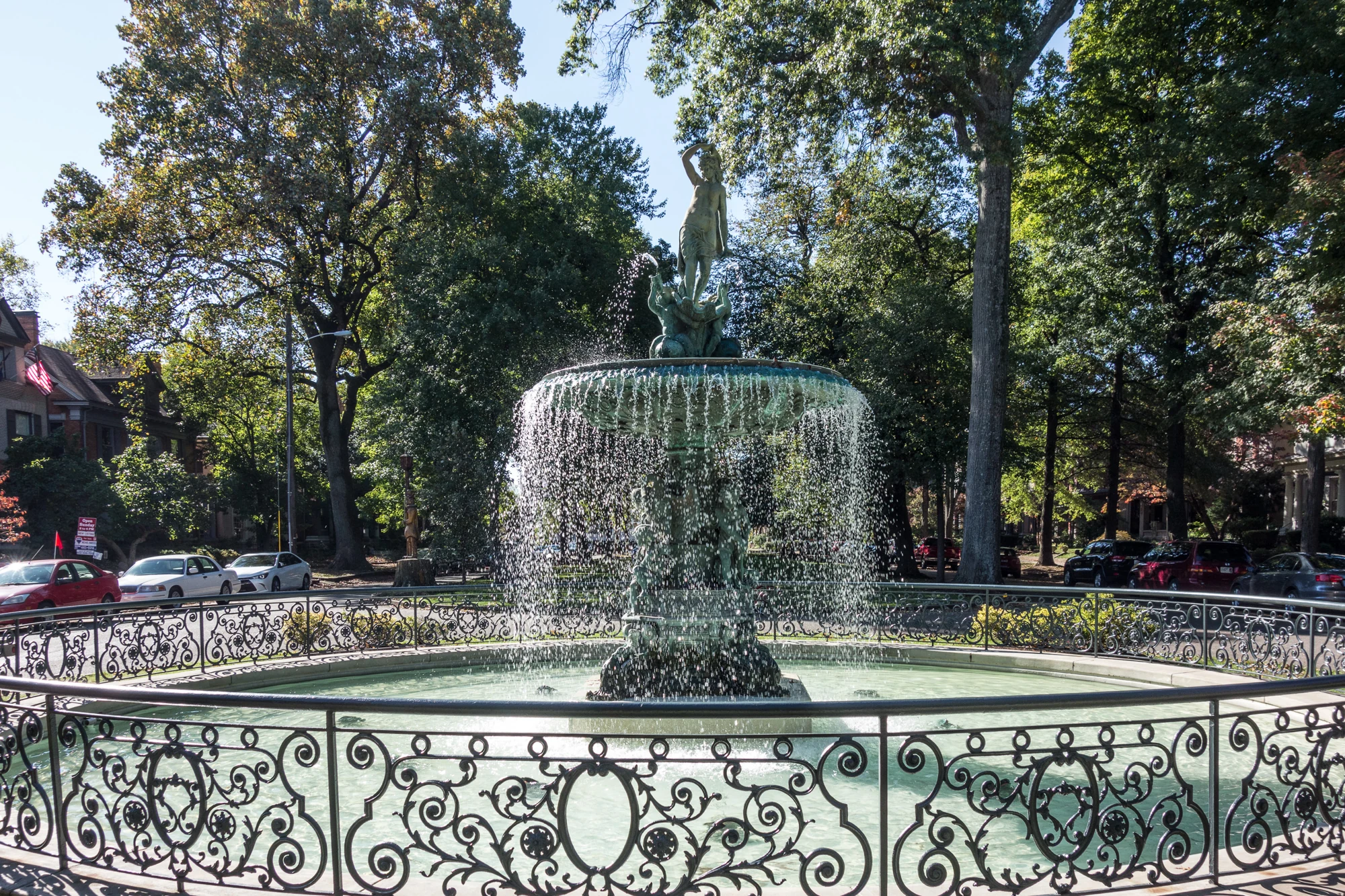
The fountain's Venus figure is a neighborhood landmark. It provides a focal point for looking at the surrounding houses and landscaped court. Pair this stop with nearby Belgravia Court. Self-guided walking guide
3. Belgravia Court
Location: Belgravia Court near St. James Court and South Fourth Street, Louisville, Kentucky.
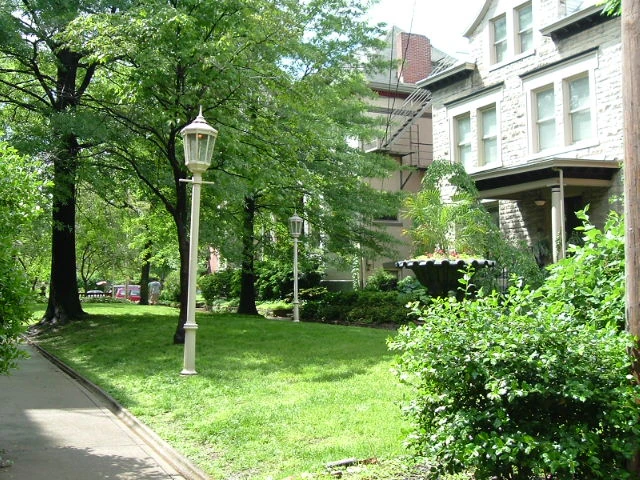
Walk the pedestrian court slowly and compare the houses, entrances, and planting. It is one of the neighborhood's most distinctive spaces, especially if your idea of a residential street normally includes driveways and passing cars. These are people's homes; enjoy the architecture from the public walkway. Neighborhood walking tour
4. The Pink Palace
Address: 1473 St. James Court, Louisville, KY 40208.
At the junction with Belgravia Court, this pink, turreted house is an unmistakable exterior stop. It is a private residence, not a walk-in museum. Its elaborate glass and distinctive silhouette are worth noticing alongside the disputed stories described above. Location and visiting context · Historical context
5. Central Park and the visitors center
Visitors center: 1340 S. Fourth Street, Louisville, KY 40208, inside Central Park.
The park offers shaded walking paths, mature trees, and a vine-covered pergola. The visitors center occupies a restored mission-style building on the park's hill. It is a useful starting point for neighborhood orientation and guided architectural tours.
The Neighborhood Council currently lists center hours as Tuesday–Saturday, 10 a.m.–3 p.m., March–December, with guided tours Wednesday–Saturday at 11 a.m. and 1:30 p.m. Confirm availability before making a special trip. Street parking is available around the park's perimeter. Official visitor information
6. The Witches' Tree
Location: South Sixth Street and Park Avenue, Louisville, Kentucky.
The gnarled tree is often decorated with charms and offerings. Local legend links its appearance to witches angered by a tree cut down for May Day celebrations and the devastating 1890 tornado. The curse and magical regrowth belong to folklore, not established history. Local account of the legend
7. The Filson Historical Society and Ferguson Mansion
Address: 1310 S. Third Street, Louisville, KY 40208.
Built for businessman Edwin Hite Ferguson between 1902 and 1905, this Beaux-Arts mansion was the most expensive home in Louisville at the time, according to its Kentucky historical marker. It became the Filson's headquarters in 1986. It offers a different architectural character from the heavier stonework of Conrad-Caldwell.
The Filson itself was founded in 1884 and preserves books, manuscripts, photographs, art, and artifacts concerning Kentucky and neighboring states. It is a useful destination for anyone who wants to move beyond sightseeing into local or family history. Kentucky Historical Society marker
Visiting detail: The current schedule lists Monday–Friday, 9 a.m.–4:30 p.m., with closure on the third Friday of each month. The site also lists closures for October 16 and 19, 2026. Check the live visitor page before going. Filson visitor information
8. Millionaires Row
Location: South Third Street, roughly the 1100–1700 blocks, Louisville, Kentucky.
This stretch showcases substantial residences associated with Louisville's wealthy industrial and business families. The 1300 and 1400 blocks are particularly useful for an architecture-focused stroll. Self-guided walking guide
9. Speed Art Museum — a nearby addition
Address: 2035 S. Third Street, Louisville, KY 40208.
South of the central mansion district, the Speed makes a separate stop for art lovers. Founded in 1927, it is Kentucky's oldest and largest art museum. Pairing it with an Old Louisville walk adds an indoor art visit to a day centered on architecture. Check current exhibitions, admission, and hours directly with the museum. Speed Art Museum
Events that bring the neighborhood to life
- St. James Court Art Show: Traditionally held the first full weekend of October. Its 2026 dates were October 2–4, so that year's show has already passed as of this guide's research date. Admission is free. The residential courts become the setting for fine art and contemporary craft exhibitors. Official history and event details
- Kentucky Shakespeare Festival: Free performances in Central Park are a summer tradition. The company announced its 66th festival season in 2026. Check its calendar for the next season; this is a seasonal event, not a year-round nightly attraction. Kentucky Shakespeare
- Holiday Home Tour: The neighborhood's holiday tour offers a chance to see decorated historic interiors. Dates and participating homes change, so use the Neighborhood Council's event information when planning. Neighborhood events · Historical neighborhood profile
Things to know about the houses and real estate
Old Louisville's housing is more varied than the famous mansion photographs suggest. The city describes a mix of single-family houses, condominiums, apartments in converted residences, and purpose-built apartment buildings. Large architect-designed houses concentrate along the central numbered streets, while more modest early-20th-century homes appear farther east and west.
The preservation district was designated in 1974. Depending on the work involved, exterior changes require a Certificate of Appropriateness and review against the district's design guidelines. For a particular house, check its actual district status and planned work with the city rather than assuming that every Old Louisville address has identical restrictions. This guide covers housing character, not a current pricing or investment analysis. Louisville Metro's district description and review information
A historic house of your own
Compare the rooms you will use every day as carefully as the architectural details. Look at bedroom and bathroom access, stairs, storage, laundry, and how later additions connect to the original house. Ask about roof and masonry work, electrical and plumbing updates, heating and cooling, and any history of moisture. An attractive restoration and a manageable maintenance plan are separate things to establish.
Condominiums and converted buildings
Start by understanding exactly what you would own and maintain. For a condominium, review the governing documents, shared-building responsibilities, reserves, planned work, and assessments. For a building divided into several residences, verify its legal use and the configuration described in the listing. A shared entrance or a similar exterior does not establish the same ownership arrangement.
The street is part of the home
Visit the block during your normal arrival and departure times. Check parking, rear access, deliveries, outdoor space, and the route to Central Park or other places you expect to use. If a walking-court setting appeals to you, inspect how the actual home is reached and serviced. Compare those practical details before choosing between two otherwise similar properties.
Food and drink to build into a visit
Louisville Tourism lists a broad range of neighborhood stops: 610 Magnolia for a special-occasion meal; Buck's for dining in the historic Mayflower building; Burger Boy for a casual diner; Old Louisville Tavern for burgers and pub food; and Old Louisville Brewery for local beer. Check each business's current hours and reservation policy before going. Louisville Tourism's neighborhood dining guide
A suggested first visit
Start at the visitors center in Central Park, then walk to Conrad-Caldwell House, continue down St. James Court to the fountain, and explore Belgravia Court and the Pink Palace. Add the Witches' Tree on the park's west side if neighborhood folklore interests you.
For a longer visit, make South Third Street and the Filson a separate segment, or continue south to the Speed Art Museum. This is a suggested grouping of stops, not a measured route. Allow extra time for museum interiors and check opening days before choosing the order.
Before you make a move.
Schools, ownership costs, and the questions to bring to a home tour.
Where should I start a home search in Old Louisville?
Compare single-family houses, condominiums, and homes within converted historic buildings separately. Grand houses along the central numbered streets and more modest homes farther east and west offer different space, upkeep, and ownership choices. Start by choosing which of those priorities matters most, then compare properties with similar condition, setting, and ownership responsibilities.
How do I check the schools for a particular home?
Use the exact address to identify the responsible district, then confirm the school for each grade and the year you plan to enroll. A nearby school or a community name in a listing is not an attendance assignment. Ask the district about enrollment and transportation for your situation.
JCPS School FinderHow should I compare prices and monthly costs?
Ask Tina for recent comparable sales matched to the home’s location, condition, size, and land. For monthly planning, include taxes, insurance, and any association fees alongside the mortgage, then allow for utilities, repairs, and ongoing maintenance. Obtain estimates for the property you are considering.
CFPB guide to ownership costsWhat should I do during a first property visit?
Study room layout, stairs, parking, and the condition of roofs, masonry, windows, and major systems. For a condo, review shared responsibilities; for exterior changes, establish the property's preservation-district status before planning the work. Also make the trips you would repeat during a normal week, at the times you would use them. The suggested first visit in this guide introduces local places; a home tour should test your everyday routine too.
What should I know about renovating in Old Louisville?
Establish whether the actual property is inside the preservation district and discuss the proposed exterior work with Louisville Metro. Depending on the project, a Certificate of Appropriateness and review against the district guidelines may be required. Build that process into the renovation plan before comparing purchase and improvement costs.
Old Louisville preservation informationA few places to compare.
Explore another community, then talk with Tina about how the homes and daily routines fit your plans.
Follow along.
Local listings, market updates, and open houses.