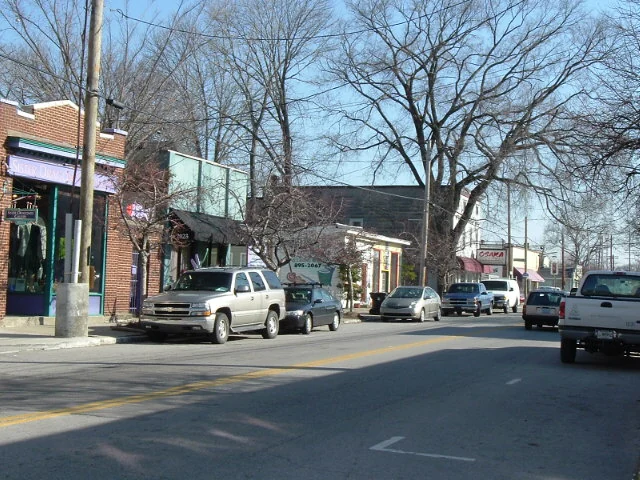
The appeal is partly architectural and partly practical. A resident can choose a home near a lively business corridor while still having side streets and smaller parks to explore. The experience varies substantially by address, especially in relation to the railroad, major roads, and changes in elevation.
Homes & everyday life
in Clifton.
Compare homes by their actual block, layout, and relationship to Frankfort Avenue. Clifton's appeal includes varied houses and a neighborhood commercial corridor rather than one uniform residential style.
Look a little closer.
Check street and rear access, parking, outdoor space, and renovation history. Walk your likely route to shops or dining and visit at different times to understand nearby activity.
Tina’s Green Tree home search.
Opens in a new tab.
Get your bearings
The city's Clifton Preservation District covers approximately 423 acres, bounded by Brownsboro Road, I-64, Ewing Avenue, and Mellwood Avenue. Frankfort Avenue forms a central commercial and transportation route through it; Payne Street runs roughly parallel to the south.
Clifton and Clifton Heights are separate neighborhoods. Likewise, continuing east along Frankfort Avenue takes you into Crescent Hill, which shares the corridor but has its own history and landmarks. Clifton Preservation District
Sights to see and things to do
Walk Frankfort Avenue and its connecting streets
Begin with a short section of the avenue, choosing a few shops or restaurants whose current hours fit your visit. Then explore adjoining residential blocks. The change between commercial frontage and houses is one of the most useful things to experience firsthand.
Look above storefronts and along the side streets for differences in materials, roof forms, porches, and setbacks. The community council's walking-tour and history resources can add a more structured route. Keep to public areas and respect residential entrances and business loading spaces. Neighborhood history and walking-tour resources
Visit Bingham Park
Bingham Park, 160 Coral Avenue, is a neighborhood-scale Olmsted park with walking paths, play facilities, and basketball. The conservancy identifies its design date as 1915 and notes that it was originally called Clifton Park before being renamed for Robert Worth Bingham.
It offers a different experience from Louisville's larger destination parks: a place to pause during a neighborhood outing or incorporate outdoor time into an ordinary day. Seasonal facilities such as the sprayground should be checked before making them the main reason for a visit. Olmsted Parks Conservancy: Bingham Park
Know that today's Clifton Park is a separate place
The present Clifton Park is at 133 North Charlton Street. Louisville lists it as a 1.19-acre park acquired in 1976, with a playground, picnic tables, and court facilities.
Because Bingham Park once carried the Clifton name, older descriptions can be confusing. Use the address when meeting someone or navigating to the current park. This smaller public space is another useful stop when evaluating what outdoor recreation is available near a particular home. Louisville Parks: Clifton Park
Plan for The Dot Experience at American Printing House
American Printing House is preparing The Dot Experience, a museum focused on the lives, contributions, and perspectives of people who are blind or have low vision. As of October 16, 2026, its announced opening is October 30, 2026. It should therefore be treated as an upcoming attraction at this guide's research date.
The museum describes 28,000 square feet of exhibition space developed with input from people with a range of disabilities. Its emphasis on accessibility is central to the experience rather than an additional visitor service. The Dot Experience: opening and mission
The planned exhibits include braille, assistive technology, Helen Keller, and personal stories, with touch, audio, and other ways to engage. APH also describes factory tours showing the production of accessible educational materials. Check opening status, tickets, and the separate arrangements for museum and factory experiences before making plans. Exhibits and experiences
Real estate and housing character
The neighborhood offers varied building types
Clifton's attraction is not limited to one house style or size. The city describes residential buildings as the predominant district type, alongside commercial and industrial buildings along transportation corridors. Clifton district overview
When comparing homes, pay attention to how the building works rather than how well a label such as “historic charm” fits. Room connections, ceiling heights, stair placement, bathrooms, and storage can differ substantially between older properties. A renovation may improve finishes while leaving a layout that does or does not suit your needs.
Ask for the history of roof, masonry, drainage, electrical, and mechanical work. Distinguish recently completed cosmetic updates from major maintenance. On a sloping site, examine how the grade relates to lower-level rooms and outdoor areas.
Preservation review belongs early in renovation planning
Clifton became a local preservation district in 2003. Depending on the scope, exterior changes require a Certificate of Appropriateness and review under the district's guidelines.
Before buying a property with a specific alteration in mind, discuss that project with preservation staff. Confirm the parcel's location on the official map and ask what documentation is needed. An addition, new parking arrangement, or major exterior replacement should be considered as a concrete proposal rather than assumed from a listing's description. Clifton review process and design guidelines
Consider the railroad and business corridor at the actual home
The railroad is a defining physical feature of the area. Visit the property more than once and assess sound from the rooms you would use most, as well as from a porch or yard. Check your walking and driving routes across the corridor.
Near restaurants or other businesses, look at patios, deliveries, collection areas, and evening activity. Being close to a favorite destination may be a major benefit, but the suitability of a particular address depends on your routine and preferences. A showing at one quiet hour does not reveal every condition.
Check parking and shared-property details
Confirm whether parking is on the street, in a driveway, in an alley-accessed space, or assigned through a building. Walk the route to the entrance and consider guests and deliveries.
For a condominium or other shared building, review maintenance responsibilities, insurance, reserves, and planned projects. For a rental, clarify utilities, parking costs, and access to outdoor space. These details make comparisons more meaningful than square footage alone.
A useful first visit
Combine a Frankfort Avenue stop with a short residential walk and time at Bingham or Clifton Park. Add The Dot Experience only after checking its opening and ticket arrangements. If considering a home, return at a different hour and test the exact routes you would use for work, shopping, and recreation. That combination reveals both Clifton's attractions and the everyday details of living beside an established urban corridor.
Before you make a move.
Schools, ownership costs, and the questions to bring to a home tour.
Where should I start a home search in Clifton?
Compare homes by their actual block, layout, and relationship to Frankfort Avenue. Clifton's appeal includes varied houses and a neighborhood commercial corridor rather than one uniform residential style. Start by choosing which of those priorities matters most, then compare properties with similar condition, setting, and ownership responsibilities.
How do I check the schools for a particular home?
Use the exact address to identify the responsible district, then confirm the school for each grade and the year you plan to enroll. A nearby school or a community name in a listing is not an attendance assignment. Ask the district about enrollment and transportation for your situation.
JCPS School FinderHow should I compare prices and monthly costs?
Ask Tina for recent comparable sales matched to the home’s location, condition, size, and land. For monthly planning, include taxes, insurance, and any association fees alongside the mortgage, then allow for utilities, repairs, and ongoing maintenance. Obtain estimates for the property you are considering.
CFPB guide to ownership costsWhat should I do during a first property visit?
Check street and rear access, parking, outdoor space, and renovation history. Walk your likely route to shops or dining and visit at different times to understand nearby activity. Also make the trips you would repeat during a normal week, at the times you would use them. The suggested first visit in this guide introduces local places; a home tour should test your everyday routine too.
Can I make changes after buying?
Before budgeting for an addition, exterior renovation, outbuilding, or different use, identify the property’s jurisdiction and ask the responsible planning office about the project. Review recorded restrictions and association documents where applicable. For an older home, also establish whether historic-district review applies.
A few places to compare.
Explore another community, then talk with Tina about how the homes and daily routines fit your plans.
Follow along.
Local listings, market updates, and open houses.