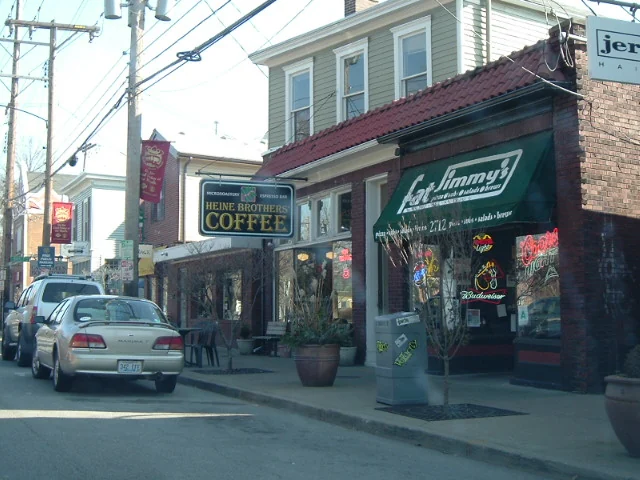
The neighborhood also has a strong tradition of community involvement. Events and volunteer organizations give residents ways to participate beyond their own street. For someone considering a home, the important step is to connect those attractions with the everyday experience of a particular address—its layout, condition, parking, and routes to the places you use most.
Homes & everyday life
in Crescent Hill.
Treat historic character as a starting point for comparing individual homes. Age, size, layout, alterations, and the relationship to Frankfort Avenue can vary within Crescent Hill.
Look a little closer.
Look beyond finishes to the roof, systems, drainage, and quality of additions. Test parking, stairs, and the actual walking or driving routes that would become part of your week.
Tina’s Green Tree home search.
Opens in a new tab.
Get your bearings
Crescent Hill shares the Frankfort Avenue corridor with Clifton, but it is a distinct neighborhood farther east. Louisville's District 9 neighborhood directory generally places it between Brownsboro Road and Lexington Road, extending east from North Ewing Avenue toward the Masonic Home area.
Use those landmarks for orientation, then check the exact property. Neighborhood boundaries used for planning, association activity, and real estate marketing do not always match precisely. District 9 neighborhood information
Sights to see and things to do
Explore Frankfort Avenue
Choose a few businesses along the avenue and make time to walk between them. A meal, shopping stop, and look at the surrounding architecture can easily form the core of a first visit.
Pay attention to the transition from business frontage to residential streets. That relationship is part of the neighborhood's appeal, and it is useful context for a housing search. A property close to the corridor can offer convenience while experiencing different traffic and sound conditions from a home several blocks away.
See the Peterson-Dumesnil House
At 301 South Peterson Avenue, the house and grounds provide one of Crescent Hill's most recognizable settings. Its architecture is worth noticing, particularly the porch and roofline, and the property hosts community activities as well as private events.
The operator explicitly states that the interior is not open on a regular public schedule. Public events sometimes include tours, so use the event calendar or contact the foundation if seeing inside is your priority. Do not plan around an assumed daily house-museum tour. House visitor questions
Stop at the Crescent Hill Library
The branch is at 2762 Frankfort Avenue. Its historic reading spaces and children's area make it a worthwhile civic stop during a neighborhood visit.
The library publishes detailed accessibility information, including ramps from the parking lot and Birchwood Avenue and elevator access between floors. Check the branch's current hours and program calendar if you want to combine an architectural visit with an event. Branch location, history, and accessibility
Know the reservoir's current access status
Crescent Hill Reservoir, which began operating in 1879, is a significant local landmark. However, its familiar walking route is affected by a major project that began in June 2025.
As checked in October 2026, Louisville Water describes the reservoir as undergoing relining and railing work, with public reopening hoped for after completion in 2029. Older recommendations for an unrestricted reservoir walk or regular gatehouse outing should not guide current plans. The project page also reports related access and construction changes around Reservoir Avenue. Reservoir project and access updates
Play Crescent Hill Golf Course
The municipal Crescent Hill Golf Course dates to 1926. Louisville describes a nine-hole course without bunkers or water hazards, making its design different from many larger courses.
A round here can be a manageable neighborhood recreation outing without planning an entire day around golf. Confirm tee times, rates, and current course conditions directly. Its location near other recreation facilities is useful, but each facility has its own hours and arrangements. Crescent Hill Golf Course
Use Mary T. Meagher Aquatic Center
The Mary T. Meagher Aquatic Center provides indoor swimming, lap lanes, fitness equipment, and scheduled programs. It is a practical year-round amenity to investigate if swimming is part of your routine.
Check the activity schedule as well as building hours: lap swimming, lessons, and recreational sessions may use the pool differently. Outdoor sprayground facilities are seasonal and should be considered separately. Aquatic center information
Community life
The Crescent Hill Community Council is a volunteer organization involved in neighborhood advocacy, events, and physical improvements. Its listed activities include Fourth of July celebrations, an Easter parade, a chili cookoff, and a holiday open house.
For a new resident, the council's meetings and announcements can be a useful introduction to local issues and opportunities to participate. For visitors, confirm the current event date and format rather than relying on a prior year's listing. Crescent Hill Community Council
Real estate and housing character
Choose the property that fits your daily needs
Crescent Hill's historic setting does not mean every home has the same age, size, layout, or level of upkeep. Compare the living arrangement first: bedroom access, stairs, bathrooms, storage, and the relationship between indoor rooms and outdoor space.
An older house can offer appealing details while requiring careful attention to major systems. Ask for records of roof, masonry, electrical, plumbing, heating, and drainage work. Separate the date of a cosmetic renovation from the condition of the parts of the building that are less visible in listing photographs.
Evaluate the lot as well as the interior
Walk the entire accessible exterior area. Notice slopes, retaining structures, mature trees, fences, and how rainwater moves away from the house. Confirm whether a garage or parking space is usable for your actual vehicle and whether access depends on an alley or shared arrangement.
A deep or landscaped lot can be attractive, but usable outdoor space and maintenance responsibilities matter more than lot size alone. Think about the type of outdoor time you want: gardening, a level play area, a shaded seating space, or minimal upkeep.
Check the specific property's status before remodeling
A historic neighborhood, a National Register listing, and an individually designated local landmark are different concepts. Do not assume that every Crescent Hill property has identical restrictions—or that none apply. Check the parcel and proposed work with Louisville's planning staff before relying on a renovation concept.
For a condominium, add association rules, reserves, maintenance responsibilities, and planned projects to the review. For a rental, clarify parking, utilities, and outdoor access in the lease. The neighborhood name alone cannot answer those questions.
A useful first visit
Combine a Frankfort Avenue stop with the library and an exterior look at the Peterson-Dumesnil House when access allows. Add golf or swimming if it fits your interests, using current facility schedules. Treat the reservoir as a landmark under construction rather than an available walking destination. Finally, return to any prospective home at another hour and test the routes you would use in ordinary life.
Before you make a move.
Schools, ownership costs, and the questions to bring to a home tour.
Where should I start a home search in Crescent Hill?
Treat historic character as a starting point for comparing individual homes. Age, size, layout, alterations, and the relationship to Frankfort Avenue can vary within Crescent Hill. Start by choosing which of those priorities matters most, then compare properties with similar condition, setting, and ownership responsibilities.
How do I check the schools for a particular home?
Use the exact address to identify the responsible district, then confirm the school for each grade and the year you plan to enroll. A nearby school or a community name in a listing is not an attendance assignment. Ask the district about enrollment and transportation for your situation.
JCPS School FinderHow should I compare prices and monthly costs?
Ask Tina for recent comparable sales matched to the home’s location, condition, size, and land. For monthly planning, include taxes, insurance, and any association fees alongside the mortgage, then allow for utilities, repairs, and ongoing maintenance. Obtain estimates for the property you are considering.
CFPB guide to ownership costsWhat should I do during a first property visit?
Look beyond finishes to the roof, systems, drainage, and quality of additions. Test parking, stairs, and the actual walking or driving routes that would become part of your week. Also make the trips you would repeat during a normal week, at the times you would use them. The suggested first visit in this guide introduces local places; a home tour should test your everyday routine too.
Can I make changes after buying?
Before budgeting for an addition, exterior renovation, outbuilding, or different use, identify the property’s jurisdiction and ask the responsible planning office about the project. Review recorded restrictions and association documents where applicable. For an older home, also establish whether historic-district review applies.
A few places to compare.
Explore another community, then talk with Tina about how the homes and daily routines fit your plans.
Follow along.
Local listings, market updates, and open houses.