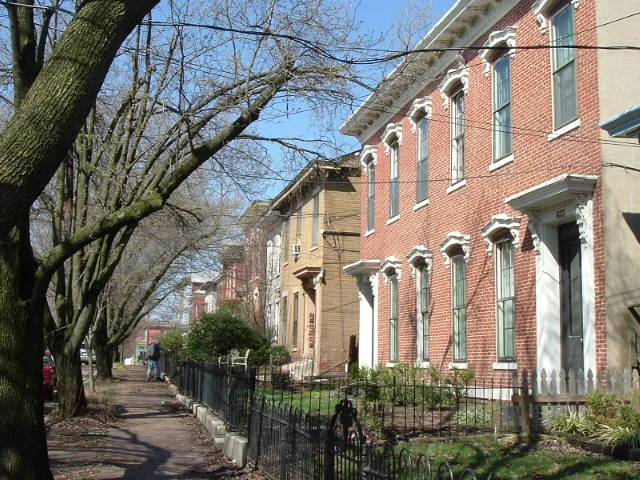
For a visitor, the neighborhood supports a varied day: a small history museum, a distillery experience, gardens, and a stadium event are all possibilities. For a resident, understanding the specific block matters. The industrial and entertainment uses are part of everyday life here, alongside the architectural character that attracts people to the area.
Homes & everyday life
in Butchertown.
Shotgun and camelback houses, two-story brick residences, and newer condominiums create different ways to live in Butchertown. Its mix of homes, businesses, and destinations makes the immediate block important.
Look a little closer.
Test room connections, storage, parking, and outdoor space. Visit at the hours you would normally be home, and review the requirements for exterior work or association-governed property as applicable.
Tina’s Green Tree home search.
Opens in a new tab.
Get your bearings
Louisville's preservation office describes Butchertown as east of downtown, with the Ohio River to the north, I-65 to the west, Main Street to the south, and Mellwood Avenue and Beargrass Creek to the east. The local preservation district was designated in 2003.
The city's description emphasizes the longstanding coexistence of homes, industry, and commerce. Simple vernacular houses appear alongside more elaborate Queen Anne and Greek Revival examples. This variety is a useful reason to explore more than one street before deciding what “a Butchertown home” means. Butchertown Preservation District
Sights to see and things to do
Thomas Edison House
The museum presents Edison's Louisville connection through artifacts and interpretation of communication and invention. Its collection includes phonographs and early lighting-related objects. It is a good choice for a smaller, focused history stop rather than a full-day museum outing.
Confirm tour arrangements directly before going. The museum's historic information page links onward for admission details, so an old directory listing should not be treated as a guaranteed operating schedule. Museum information
Waterfront Botanical Gardens
The gardens offer planted landscapes, educational programming, and opportunities to see the site develop over time. The operator's May 2026 construction announcement says the gardens remain open with selected areas accessible during Phase 2A work.
That expansion includes bonsai facilities, a tree allée, and a Beargrass Creek overlook, with opening planned for spring 2027. Those planned features should not be described as already open. The broader Japanese Garden also remains a phased project. Current expansion information
Check the visitor rules when planning your stop. The gardens prohibit picnicking and pets other than qualifying service animals, and visitors are asked to remain on designated paths. These policies make it a different outing from an unrestricted neighborhood park. Garden visitor information
Lynn Family Stadium
Lynn Family Stadium is a major event destination in Butchertown. Its current website lists Louisville City FC, Racing Louisville FC, and the UFL's Louisville Kings among its teams. The stadium's event calendar is the appropriate place to check what is actually scheduled during your visit.
A match or other event offers a very different neighborhood experience from a quiet weekday walk. Plan transportation and parking ahead, and allow time for arriving and departing crowds. For prospective residents, an event day is also a useful opportunity to observe how a particular block functions. Lynn Family Stadium
Copper & Kings
Copper & Kings offers distillery tours and tastings centered on American brandy, with bourbon also part of its current experience lineup. Tours can include the copper still room, barrel areas, and guided tastings; the precise inclusions depend on the experience booked.
This provides a different angle on Louisville's spirits culture. Compare the available tours instead of assuming all distillery visits cover the same products or production methods. Reserve ahead, check age and identification requirements, and arrange transportation appropriate to a tasting outing. Copper & Kings tours
Explore the streets between destinations
Leave time to notice the neighborhood itself. Residential buildings, older commercial structures, industrial properties, and newer development sit close together. A walk can make those relationships clearer than a drive directly from one attraction to another.
Use public sidewalks and respect working entrances, loading areas, and private yards. Choose your route around actual crossings and entrances rather than assuming that nearby destinations have a direct pedestrian connection.
Real estate and housing character
Historic houses offer different kinds of space
The PVA identifies shotgun and camelback houses, two-story brick residences, and newer condominium development among Butchertown's housing. PVA housing overview
In a narrow older house, examine how rooms connect and where privacy, storage, and bathroom access fit into everyday use. A renovated kitchen is only one part of the layout. For a property with an addition or upper rear section, review how the old and new portions connect structurally and functionally.
Outdoor space and parking deserve an equally careful look. Confirm which spaces belong to the property, whether rear access is practical, and how a patio or yard relates to adjoining uses. These details can distinguish two otherwise similar listings.
Preservation rules distinguish residential and industrial areas
The local district includes Residential and Industrial Character Areas, with different review thresholds and design guidelines. Exterior work may require a Certificate of Appropriateness, depending on the property and scope.
Before planning a renovation, identify the parcel's character area and discuss the proposed work with preservation staff. A building's current appearance does not establish that a future addition, demolition, or exterior replacement will be approved. District map, review thresholds, and guidelines
Evaluate the working neighborhood honestly
Industrial activity is a material housing consideration here. Louisville Public Media reported in August 2026 on odor complaints associated with the Swift Pork plant, drawing on local air-pollution-control records. That is a reason to visit a prospective home repeatedly and ask informed questions about the immediate surroundings. It does not establish identical conditions at every address. LPM reporting on Butchertown odor complaints
Listen and observe at the home during ordinary working hours and in the evening. Consider truck movements, nearby equipment, entertainment activity, and how often you expect to use outdoor space. For a condominium, include shared-building maintenance, reserves, parking rights, and rental restrictions in the comparison.
A useful first visit
Choose one attraction with confirmed access, then spend time on the surrounding residential streets. Add the gardens or a distillery booking if the schedule works. If you are considering a home, return on a stadium event day and on an ordinary weekday. Seeing both conditions will tell you more than a single weekend showing about the balance of historic housing, industry, and entertainment that defines Butchertown.
Before you make a move.
Schools, ownership costs, and the questions to bring to a home tour.
Where should I start a home search in Butchertown?
Shotgun and camelback houses, two-story brick residences, and newer condominiums create different ways to live in Butchertown. Its mix of homes, businesses, and destinations makes the immediate block important. Start by choosing which of those priorities matters most, then compare properties with similar condition, setting, and ownership responsibilities.
How do I check the schools for a particular home?
Use the exact address to identify the responsible district, then confirm the school for each grade and the year you plan to enroll. A nearby school or a community name in a listing is not an attendance assignment. Ask the district about enrollment and transportation for your situation.
JCPS School FinderHow should I compare prices and monthly costs?
Ask Tina for recent comparable sales matched to the home’s location, condition, size, and land. For monthly planning, include taxes, insurance, and any association fees alongside the mortgage, then allow for utilities, repairs, and ongoing maintenance. Obtain estimates for the property you are considering.
CFPB guide to ownership costsWhat should I do during a first property visit?
Test room connections, storage, parking, and outdoor space. Visit at the hours you would normally be home, and review the requirements for exterior work or association-governed property as applicable. Also make the trips you would repeat during a normal week, at the times you would use them. The suggested first visit in this guide introduces local places; a home tour should test your everyday routine too.
Can I make changes after buying?
Before budgeting for an addition, exterior renovation, outbuilding, or different use, identify the property’s jurisdiction and ask the responsible planning office about the project. Review recorded restrictions and association documents where applicable. For an older home, also establish whether historic-district review applies.
A few places to compare.
Explore another community, then talk with Tina about how the homes and daily routines fit your plans.
Follow along.
Local listings, market updates, and open houses.