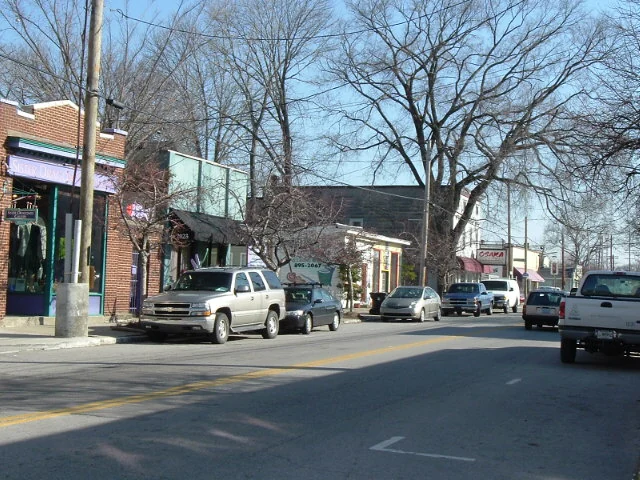
For someone considering a home here, the appeal is the combination of established residential streets and access to nearby parts of Louisville. The practical experience depends on the specific lot and route: a hillside home can feel quite different from one near Brownsboro Road or a larger apartment property.
Homes & everyday life
in Clifton Heights.
The relationship between a house and its sloped lot is a useful starting point in Clifton Heights. An outlook, separation from the street, or a lower-level entrance can change how the same floor area functions.
Look a little closer.
Walk the driveway, yard, and stairs. Review retaining structures and drainage, then test access to the roads and everyday destinations you expect to use.
Tina’s Green Tree home search.
Opens in a new tab.
Get your bearings
The 2001 Clifton Heights Neighborhood Plan used the triangular area between Brownsboro Road, Zorn Avenue, and Mellwood Avenue as its study area. The plan describes rolling terrain, ridges, and steep hillsides. Contemporary neighborhood labels and smaller subdivisions can overlap, so use the actual address when comparing homes. Adopted Clifton Heights plan
Clifton Heights is distinct from Clifton, the neighborhood across Brownsboro Road associated with the Frankfort Avenue corridor. It also connects with the Brownsboro-Zorn area toward Zorn Avenue. These names help orient a search, but they should not replace parcel-level information about a property.
Sights to see and things to do
Explore Mellwood Art Center
Mellwood Art Center occupies the former Fischer Meat Packing Company complex. Its mix of artist studios, galleries, shops, businesses, and event venues makes it one of the area's most distinctive places to visit.
The operator describes more than 170 studio spaces, with creative work and small businesses sharing the former industrial setting. The building itself is part of the experience: its reuse shows how a production complex can gain a new role without losing the visual character of its earlier purpose. Mellwood Art Center
Plan around a particular gallery opening, business, or event. Studios are working spaces with individual schedules, so a visit to the complex does not guarantee every door will be open. Checking the directory first makes it easier to build an outing around what interests you.
Browse Mellwood Antiques and Interiors
At 1860 Mellwood Avenue, Mellwood Antiques and Interiors is a separate reason to allow plenty of time at the complex. The operator describes more than 45,000 square feet, with over 100 dealers and more than 200 booths and showcases.
The inventory spans furniture, art, books, records, decorative objects, and collectibles. That variety makes it suitable for both purposeful shopping and a slower browsing visit. It can also be useful when furnishing an older home, where you may want pieces with a different scale or character from standard new furniture. Mellwood Antiques and Interiors
Check the current hours and holiday closures, particularly around Derby and major holidays. If you are looking for a specific item, bring measurements and confirm transport arrangements before buying a large piece.
Walk Bradley Greenway
Bradley Greenway at Clifton Heights, 2731 Lindsay Avenue, offers a one-third-mile soft-surface loop in a restored woodland. Louisville Parks describes a spring, plants, wildlife, and a landscape reclaimed from invasive growth and dumped debris.
This is a small neighborhood nature outing rather than a long-distance hiking destination. Its scale makes it easy to combine with another stop, or to revisit regularly as the seasons change. Wear footwear suited to an unpaved path and check conditions after wet weather. Louisville Parks: Bradley Greenway
Wilderness Louisville describes a walk-in trailhead with an overlook bench and kiosk, leading into a wooded ravine. It credits neighborhood volunteers and the city's Natural Areas staff with the site's transformation. That community effort is part of what makes the greenway worth knowing about. Bradley Greenway visitor information
Use the neighborhood as a starting point for nearby outings
Clifton's Frankfort Avenue businesses and the Water Tower at River Road are nearby destinations, but they should be treated as separate stops with their own routes and hours. A map can make them look equally convenient from every Clifton Heights address when the actual hills, intersections, and entrances differ.
Choose one outing and test it from the home or block that interests you. That is a more useful measure of convenience than a general statement that everything is “minutes away.”
Real estate and housing character
Compare the house and the lot together
A sloped lot may offer an appealing outlook, separation from the street, or a distinctive arrangement of living spaces. It may also affect driveway access, outdoor maintenance, and the amount of level yard available. Walk the property rather than judging usability from its total lot size.
At a showing, begin at the place you would normally park. Follow the route into the kitchen or main living area, noting stairs, handrails, entrances, and room connections. If you need step-free access or expect those needs to change, assess the complete route rather than one doorway.
The construction era affects the inspection questions
An older bungalow or shotgun, a later ranch, and a multifamily building can each require a different inspection emphasis. Ask for records of roof work, drainage changes, mechanical replacement, and significant remodeling.
For a hillside property, discuss retaining structures and the relationship between surface drainage and lower-level rooms with the inspector. For an older house, examine how additions connect to the original building and whether renovations improved the systems as well as the finishes. These are property-specific questions, not assumptions about every home in the neighborhood.
Look beyond the advertised monthly payment
For a condominium, read the association documents, maintenance responsibilities, reserves, and any planned assessments. Confirm assigned parking, storage, insurance obligations, and rental restrictions.
For an apartment, obtain a complete list of recurring charges and clarify who handles utilities and exterior upkeep. For a detached house, consider the maintenance implications of the yard, trees, driveway, and exterior materials. Comparing these responsibilities helps explain why similarly sized homes can require different budgets and amounts of work.
Things to know before choosing Clifton Heights
The neighborhood plan has long identified pedestrian connections and links between its sections as important issues. The 2001 document is planning history, not proof that every proposed improvement has been built. Use it for context and assess present conditions directly. Adopted neighborhood plan
Walk your intended routes to nearby businesses or recreation. Check grades, sidewalks, crossings, and the return trip uphill. Drive your normal work route at the relevant time instead of relying on a distance estimate. Visit the particular property during more than one part of the day to assess traffic and sound.
The community council is a useful contact for neighborhood issues and volunteer opportunities. Its event listings may include activities without confirmed dates, so check for an actual announcement before making plans. Clifton Heights Community Council
A useful first visit
Start with Mellwood Art Center or the antique mall, then explore the residential streets around the property types that interest you. Add the short Bradley Greenway loop if conditions permit. Finish by testing one ordinary errand route from a prospective home, including the actual driveway and entrance. That combination shows both the neighborhood's attractions and the practical effect of its hillside setting.
Before you make a move.
Schools, ownership costs, and the questions to bring to a home tour.
Where should I start a home search in Clifton Heights?
The relationship between a house and its sloped lot is a useful starting point in Clifton Heights. An outlook, separation from the street, or a lower-level entrance can change how the same floor area functions. Start by choosing which of those priorities matters most, then compare properties with similar condition, setting, and ownership responsibilities.
How do I check the schools for a particular home?
Use the exact address to identify the responsible district, then confirm the school for each grade and the year you plan to enroll. A nearby school or a community name in a listing is not an attendance assignment. Ask the district about enrollment and transportation for your situation.
JCPS School FinderHow should I compare prices and monthly costs?
Ask Tina for recent comparable sales matched to the home’s location, condition, size, and land. For monthly planning, include taxes, insurance, and any association fees alongside the mortgage, then allow for utilities, repairs, and ongoing maintenance. Obtain estimates for the property you are considering.
CFPB guide to ownership costsWhat should I do during a first property visit?
Walk the driveway, yard, and stairs. Review retaining structures and drainage, then test access to the roads and everyday destinations you expect to use. Also make the trips you would repeat during a normal week, at the times you would use them. The suggested first visit in this guide introduces local places; a home tour should test your everyday routine too.
Can I make changes after buying?
Before budgeting for an addition, exterior renovation, outbuilding, or different use, identify the property’s jurisdiction and ask the responsible planning office about the project. Review recorded restrictions and association documents where applicable. For an older home, also establish whether historic-district review applies.
A few places to compare.
Explore another community, then talk with Tina about how the homes and daily routines fit your plans.
Follow along.
Local listings, market updates, and open houses.