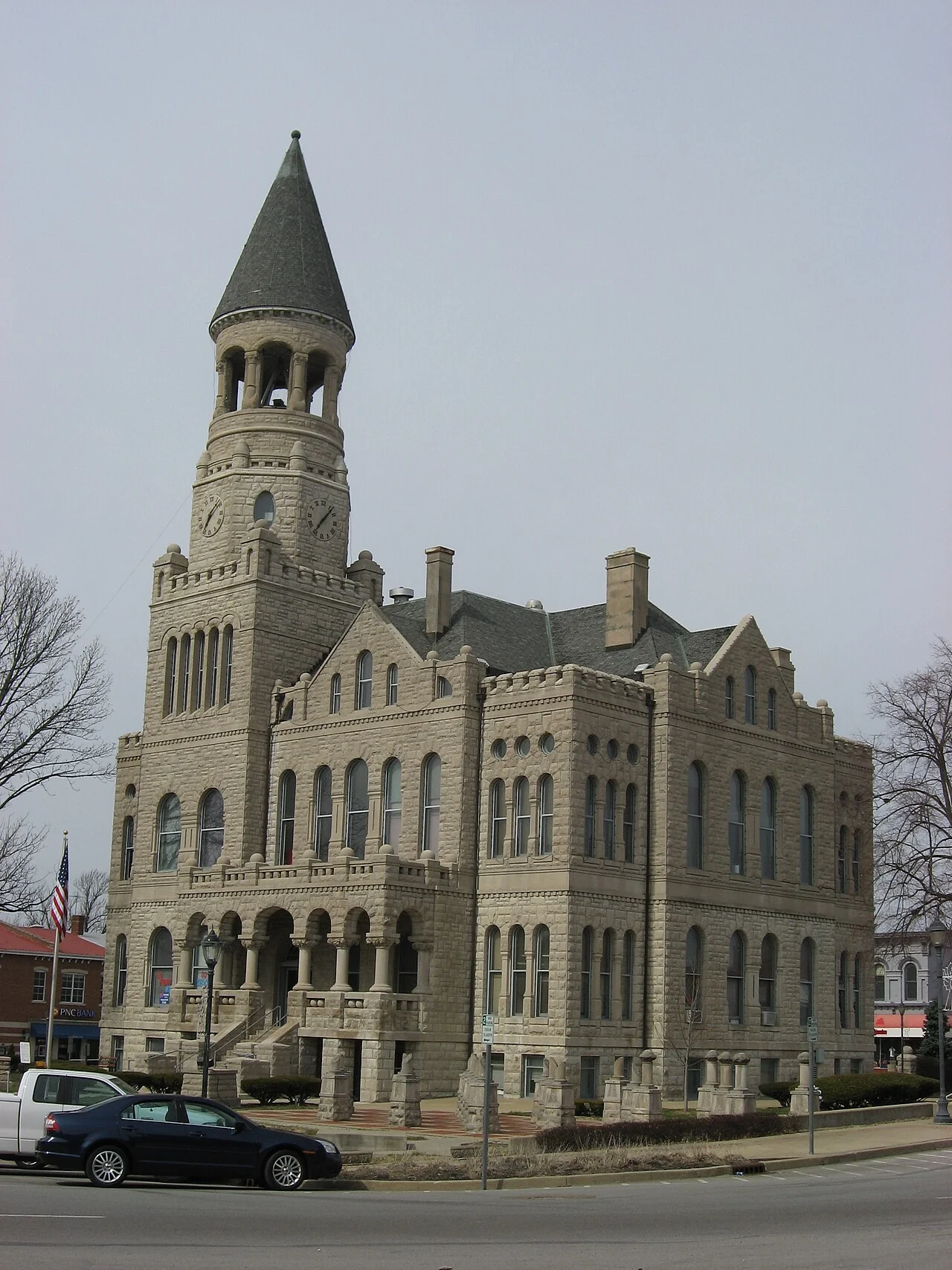
For a home search, Salem offers several settings to compare. A house near the square puts the town's historic core close at hand; a property farther out may place more emphasis on land, privacy, or access to a particular road. A Salem mailing address alone does not tell you which experience a listing provides.
Homes & everyday life
in Salem.
A home connected to the courthouse square and an outlying Washington County property present different priorities. Historic character, proximity to activities, land, and ongoing maintenance deserve separate comparisons.
Look a little closer.
Check condition and alteration history in an older home. For countryside parcels, verify services and access, then drive to your usual destinations rather than applying one travel estimate to the whole mailing area.
Tina’s Green Tree home search.
Opens in a new tab.
Get your bearings
The Washington County Courthouse anchors the downtown square. Indiana's historical marker places Salem's original plat in 1814, the same year the county was formed, and identifies the square as a continuing center of governmental, commercial, and social life.
The John Hay Center lies east of the square at 307 East Market Street. Lake Salinda is south of town, while John Hay Lake lies northwest. Salem Speedway and Beck's Mill are separate destinations outside the downtown walking area. Indiana Historical Bureau: Salem and the courthouse · City visitor guide
Sights to see and things to do
Walk the courthouse square
Begin with a circuit of the square, looking above storefront level at windows, cornices, masonry, and building proportions. It is a good place to understand Salem's older commercial character before driving to its other attractions.
Historical markers add context. A Civil War marker on the courthouse grounds records Confederate raider John Hunt Morgan's occupation of Salem on July 10, 1863, including looting and demands for payments from mill owners. Indiana Historical Bureau: Morgan's Raid
Explore the John Hay Center
Allow time for the campus rather than treating it as a single quick museum stop. The center includes the Stevens Memorial Museum, Pioneer Village, John Hay Birthplace, and Depot Railroad Museum.
The pioneer village interprets an 1830s community with buildings representing domestic life, trades, education, and public institutions. It is an interpretive village assembled for that purpose, not an intact settlement that has remained unchanged since the 1830s.
Different buildings have different access considerations, including steps and separate accessible entrances. Contact the center before arrival if a particular route or tour arrangement matters. John Hay Center visitor information
See local life through the Stevens Memorial Museum
The museum's exhibits cover a wide range of Washington County history, including household objects, lighting, local organizations, advertising, music, and pioneer life.
That breadth makes it useful even for visitors whose interests do not center on one famous person. Everyday objects can help explain the work, businesses, and institutions that supported the community over time. Stevens Memorial Museum
Visit the Depot Railroad Museum
The Depot provides a more focused stop for railroad enthusiasts and anyone curious about Salem's transportation history. It is part of the John Hay Center, so coordinate museum hours and tour options with the campus.
A visit can complement a walk on the Monon South Trail, but the museum and the trailhead are separate stops. Use the current trail map when planning the connection between them. Depot information
Find the Salem Boxcar and Monon South Trail
Salem's Monon South trailhead is at Main Street and West Small Street, marked by a restored boxcar. The operator lists parking, seating, restrooms, and other trailhead amenities.
The broader trail project remains under development. Phase 1A opened approximately 20 miles in community segments by June 2025; the proposed 57-mile corridor should not be described as a fully open continuous route. Select an outing from the current map and check notices for any segment you plan to use. Salem trailhead · Trail status and map
Spend time at Lake Salinda or John Hay Lake
The city identifies Lake Salinda as an 88-acre lake south of Salem and John Hay Lake as a 210-acre lake northwest of town. Both offer fishing access.
A city boat-launch permit is required, separate from applicable fishing-license requirements. The city prohibits gasoline-powered motors on these water-supply lakes and permits electric trolling motors. These are places for a quieter kind of boating, not a substitute for a high-speed watersports lake. City lake information · Boat permits
Watch racing at Salem Speedway
At 2729 State Road 56 West, Salem Speedway's main paved oval measures 0.555 miles, with 33-degree banking in the turns. Its physical layout gives it a very different atmosphere from a flat local oval.
Plan a visit around the track's actual event schedule and ticket information. If you are evaluating a nearby home, an event day is also a useful opportunity to understand how racing activity affects that particular location. Salem Speedway track information
Make a separate trip to Beck's Mill
The mill is at 4433 South Beck's Mill Road, south of Salem. Its machinery, water-powered setting, and surrounding grounds give it a distinct place among the county's historic attractions.
The operator currently lists Saturday hours and Sunday visits by appointment or special request. High water or severe weather can affect opening, so check before leaving town. Beck's Mill visitor information
Neighborhood and real estate considerations
Start with the daily setting you want
If your interest is an older home near the town center, walk from the property toward the square rather than relying on map distance. Look at sidewalk continuity, crossings, parking, and nearby uses.
For properties on the outskirts or in the wider Salem postal area, drive the routes you will use for groceries, work, and appointments. Additional land can change the experience substantially, but it also adds maintenance and may alter utility arrangements.
Understand the responsibilities of an older home
Salem's historic character is part of its appeal. A house with original trim, masonry, or porch details may require a different maintenance approach from newer construction.
Inspect the roof, foundation, drainage, mechanical systems, and previous additions. If exterior changes are important to your plans, establish whether any current local review or other restrictions apply to the actual property. A historic-district listing provides context, not a complete answer about a proposed renovation.
Treat recreation proximity precisely
A house described as near a lake does not necessarily have lake access, water frontage, or permission to launch from private land. Likewise, proximity to the Monon South corridor does not establish a legal entrance from the parcel.
Check access and property boundaries separately from the amenity's public visitor information. Evaluate whether you would actually use the destination often enough for its location to matter in the home comparison.
Build a useful price comparison
Compare recent closed sales with similar condition, setting, land, and services. A house near the square, a newer home elsewhere in town, and a rural property with outbuildings should not be treated as interchangeable.
Request actual utility information and investigate any private water or sewage systems where applicable. This guide describes community features; a current market analysis requires current transaction evidence and the details of the property being considered.
A useful first visit
Begin at the courthouse square, then visit the John Hay Center during its public hours. Add a walk from the Salem Boxcar trailhead or a separate lake visit. Save Beck's Mill or a scheduled speedway event for an outing with enough time to appreciate it.
Finish by driving the residential streets and daily routes associated with your home search. That provides a fuller picture than either an attractions-only visit or a day spent entirely inside houses.
Before you make a move.
Schools, ownership costs, and the questions to bring to a home tour.
Where should I start a home search in Salem?
A home connected to the courthouse square and an outlying Washington County property present different priorities. Historic character, proximity to activities, land, and ongoing maintenance deserve separate comparisons. Start by choosing which of those priorities matters most, then compare properties with similar condition, setting, and ownership responsibilities.
How do I check the schools for a particular home?
Use the exact address to identify the responsible district, then confirm the school for each grade and the year you plan to enroll. A nearby school or a community name in a listing is not an attendance assignment. Ask the district about enrollment and transportation for your situation.
Indiana Department of Education school directoryHow should I compare prices and monthly costs?
Ask Tina for recent comparable sales matched to the home’s location, condition, size, and land. For monthly planning, include taxes, insurance, and any association fees alongside the mortgage, then allow for utilities, repairs, and ongoing maintenance. Obtain estimates for the property you are considering.
CFPB guide to ownership costsWhat should I do during a first property visit?
Check condition and alteration history in an older home. For countryside parcels, verify services and access, then drive to your usual destinations rather than applying one travel estimate to the whole mailing area. Also make the trips you would repeat during a normal week, at the times you would use them. The suggested first visit in this guide introduces local places; a home tour should test your everyday routine too.
Can I make changes after buying?
Before budgeting for an addition, exterior renovation, outbuilding, or different use, identify the property’s jurisdiction and ask the responsible planning office about the project. Review recorded restrictions and association documents where applicable. For an older home, also establish whether historic-district review applies.
A few places to compare.
Explore another community, then talk with Tina about how the homes and daily routines fit your plans.
Follow along.
Local listings, market updates, and open houses.