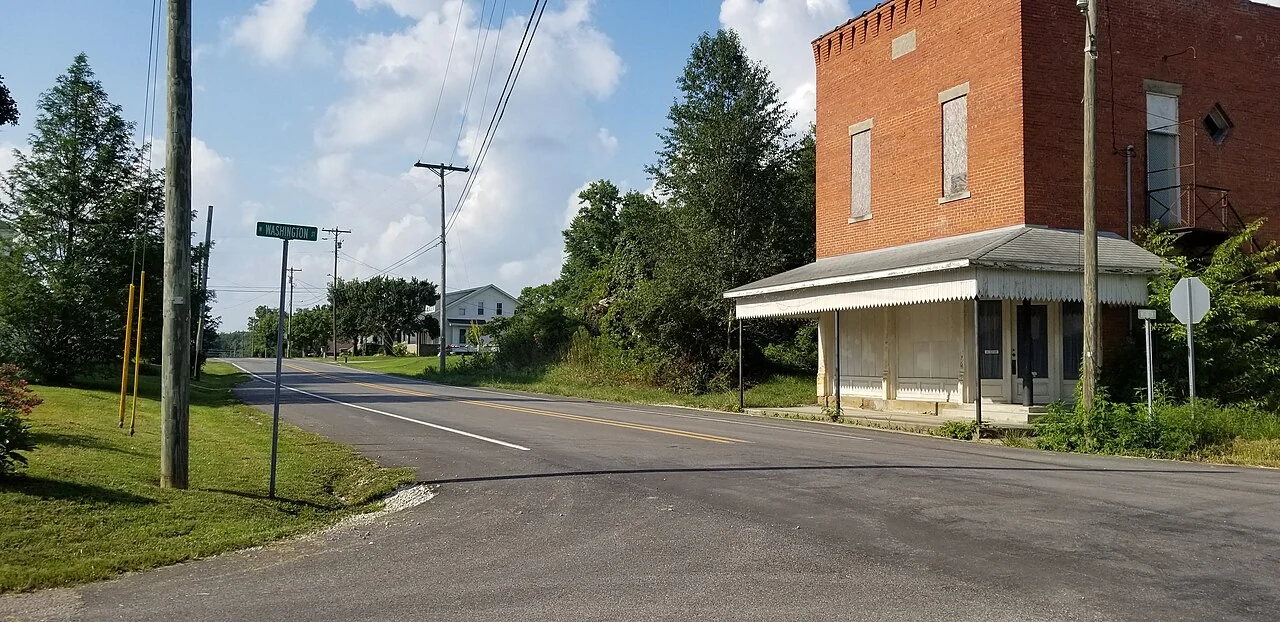
The town also has a specific early history. Nineteenth-century accounts describe a compact settlement of merchants, a tavern, and mills along a travel route between the Ohio River cities and Indianapolis. That history helps explain the community without inventing a present-day historic attraction at every old business location.
Homes & everyday life
in Little York.
Evaluate the actual house, land, and road rather than expecting a uniform neighborhood from the Little York name. Rural services and the distance to regular destinations are central comparisons.
Look a little closer.
Confirm access, water and wastewater arrangements, internet availability, and the condition of outbuildings. Visit the errands and work destinations you expect to use from that specific property.
Tina’s Green Tree home search.
Opens in a new tab.
Get your bearings
This is Little York in Washington County, Indiana. It should not be confused with places of the same name in other states or with the older name of Florence in Switzerland County.
Washington County includes Little York alongside communities such as Salem, New Pekin, and Campbellsburg. A real estate search may also include rural properties outside the town itself. Establish the location of the actual parcel before comparing services or travel. Indiana University's Washington County overview
Several worthwhile outdoor destinations lie in the broader area. Elk Creek and other Knobstone Trail access points are separate destinations, and Delaney Creek Park is another regional outing. Use their specific access information rather than navigating only to Little York.
Places to explore in the surrounding area
1. Elk Creek Trailhead and lake-side trail
Regional destination: Elk Creek Public Fishing Area, accessed from Elk Creek Road.
DNR's route description takes hikers from the parking area along the south shore of the lake before climbing to a ridge. The combination of water, wooded slopes, and changing elevation provides a more varied outing than a simple roadside stop.
Choose a turnaround point that fits your ability and the day's conditions. The trail continues beyond the lake area, so following it onward does not necessarily bring you back in a convenient loop. Trailhead directions and section description
2. An Elk Creek–Leota section hike
For hikers planning a longer route.
DNR describes the section between Elk Creek and Leota as approximately seven miles, with ridges, low areas, and significant changes in elevation. It offers a way to experience the terrain more fully than a short out-and-back walk.
That distance is between trailheads. Plan transportation or the return journey explicitly; a seven-mile point-to-point route becomes a much longer day if retraced. Check current maps and advisories before departure. DNR section information
3. Oxley Trailhead
Regional access point: Banes Hollow Road.
Oxley is another access option for the Knobstone Trail. It is useful for selecting a section of the route based on the landscape and distance you want to cover, rather than assuming the best outing always begins at the nearest lake.
Use DNR's current trailhead information and carry the map. Trailhead access roads and parking are part of the plan, especially after heavy rain or when arriving late in the day. Official trailhead directions
4. Delaney Creek Park
Regional destination: 8215 North Delaney Park Road; Scottsburg mailing address.
Delaney is a Washington County-owned park, not an Indiana state park. Its 88-acre lake sits within a larger park property with camping, cabins, picnic opportunities, and a connection to the Knobstone Trail.
The park provides a more developed recreation setting than a backcountry trailhead. Its website directs visitors to make reservations by phone or in person. The beach closed for the 2026 season on September 8, so it should not be presented as an available autumn swimming destination. Park information, Current seasonal notice
Outdoor things to know
Bring sufficient water and plan for the terrain. DNR warns that many streams shown near the Knobstone Trail can be dry for much of the year. A blue line on a map is not a dependable water supply. Hiking guidance
As checked October 16, 2026, DNR's trail page carried a temporary closure notice for a section in Clark State Forest beginning on or shortly after October 13. That does not establish that every northern access point is closed, but it does matter when planning a longer route through the system. Consult the specific closure map and current conditions. Trail advisories
Stay within authorized public access. Forested land near a trail or lake may be privately owned, and nearby residence does not create a right to cross it.
Rural living and real estate things to know
Compare a home within the town with an outlying property on its own terms. The amount of land, road access, utility arrangements, and distance to routine services may matter more than the community name in the listing.
For acreage, ask how much is usable for the purpose you have in mind. Open ground, wooded slopes, drainage areas, and access easements contribute differently to a property's usefulness. Walk the boundaries with appropriate permission and obtain reliable survey information.
Check water, wastewater, electrical service, and actual internet options. If a property includes barns or workshops, assess roofs, foundations, wiring, and access for the vehicles or equipment you expect to use. Confirm that intended uses are permitted rather than assuming rural land has no restrictions.
For an existing house, distinguish age from condition. Inspect the structure and systems and ask for records of major repairs. For a vacant parcel, establish feasibility before treating it as a ready building site.
Drive the trips you would make regularly, including work, groceries, healthcare, and school-related travel. Verify school assignment by address. A rural setting can be a good fit for some routines and inconvenient for others; that is something an actual route test can clarify.
A market comparison should match acreage, access, condition, and services. Avoid assigning the entire area a single “affordable” price range without current, comparable sales.
A good first visit
Look at the town and its surrounding roads, then choose one outdoor destination rather than trying to cover every trailhead. A short Elk Creek walk or a visit to Delaney can give the day a clear focus.
For a home search, use a separate visit to inspect the property and test daily errands. The area's recreational possibilities are a benefit to explore, but they should not substitute for understanding the practical details of the home.
Before you make a move.
Schools, ownership costs, and the questions to bring to a home tour.
Where should I start a home search in Little York?
Evaluate the actual house, land, and road rather than expecting a uniform neighborhood from the Little York name. Rural services and the distance to regular destinations are central comparisons. Start by choosing which of those priorities matters most, then compare properties with similar condition, setting, and ownership responsibilities.
How do I check the schools for a particular home?
Use the exact address to identify the responsible district, then confirm the school for each grade and the year you plan to enroll. A nearby school or a community name in a listing is not an attendance assignment. Ask the district about enrollment and transportation for your situation.
Indiana Department of Education school directoryHow should I compare prices and monthly costs?
Ask Tina for recent comparable sales matched to the home’s location, condition, size, and land. For monthly planning, include taxes, insurance, and any association fees alongside the mortgage, then allow for utilities, repairs, and ongoing maintenance. Obtain estimates for the property you are considering.
CFPB guide to ownership costsWhat should I do during a first property visit?
Confirm access, water and wastewater arrangements, internet availability, and the condition of outbuildings. Visit the errands and work destinations you expect to use from that specific property. Also make the trips you would repeat during a normal week, at the times you would use them. The suggested first visit in this guide introduces local places; a home tour should test your everyday routine too.
Can I make changes after buying?
Before budgeting for an addition, exterior renovation, outbuilding, or different use, identify the property’s jurisdiction and ask the responsible planning office about the project. Review recorded restrictions and association documents where applicable. For an older home, also establish whether historic-district review applies.
A few places to compare.
Explore another community, then talk with Tina about how the homes and daily routines fit your plans.
Follow along.
Local listings, market updates, and open houses.