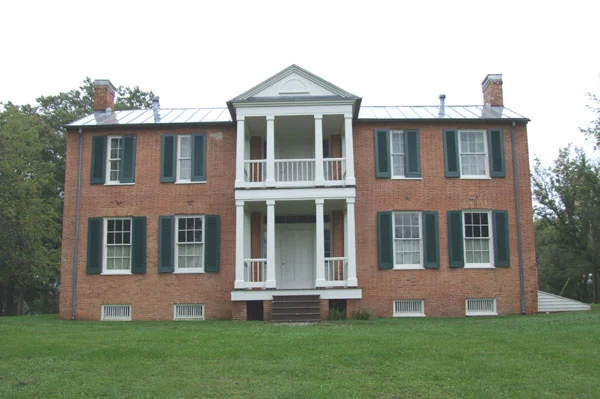
That variety also defines the housing search. Valley Station includes older suburban houses, later developments, and properties with a more rural setting. The most useful comparison is between individual locations and buildings, rather than treating the neighborhood as one uniform type of place.
Homes & everyday life
in Valley Station.
Ranches, split-levels, cottages, Cape Cods, later suburban houses, and occasional older farmhouses reflect different development periods. Use the home's actual layout, condition, and lot to form useful comparisons.
Look a little closer.
Review drainage and flood information for the parcel and its access, then distinguish cosmetic updates from major work. Check systems, additions, parking, stairs, and the outdoor space you can practically use.
Tina’s Green Tree home search.
Opens in a new tab.
Get your bearings
Dixie Highway is the principal commercial reference point, while Lower River Road and Moorman Road lead toward the riverfront. The PVA describes an irregular neighborhood extending from areas near Pleasure Ridge Park and Waverly toward Fairdale, Valley Village, and the Ohio River.
Neighborhood descriptions are broader than parcel boundaries. A Valley Station mailing or marketing label does not establish whether a particular house is near the river, close to the highway, or on higher ground toward the Knobs. Map the address before comparing travel routes or outdoor access. PVA Southwest guide
Sights to see and things to do
Tour Riverside, the Farnsley-Moremen Landing
Riverside, 7410 Moorman Road, offers house tours and outdoor exploration. The operator currently lists grounds access from sunrise to sunset throughout the week, while the visitor center and guided tours follow a more limited schedule.
Book a house tour in advance when possible. Its interpretation moves between different periods of the property's history, and specialized programs can offer a closer look at African American experiences and archaeological findings. Grounds access alone does not guarantee entry to the house. Visitor information and booking
Spend time by the Ohio River
The Riverside grounds provide a public setting for appreciating the river and understanding why farms developed around access to waterborne transportation. Combine the view with the site's interpretation rather than treating the landscape as simply a scenic backdrop.
Check current conditions after heavy rain or high water, follow posted boundaries, and leave archaeological material undisturbed. Public access to a historic site does not authorize collecting objects or entering closed work areas. Grounds and site information
Visit Southwest Regional Library
The library at 9725 Dixie Highway provides reading space, programs, technology, and meeting facilities. LFPL notes wheelchair access at the entrance and hearing-loop technology in the community room.
For prospective residents, review the current program calendar for activities relevant to your interests. A visit can reveal more about the practical value of a nearby institution than a list of building statistics. Confirm registration for any scheduled class or event. Southwest Regional Library
Explore the western forest trails
The Scott's Gap section of Jefferson Memorial Forest is a useful outdoor destination for the southwest area. Wilderness Louisville describes a hilly loop and a separate shorter accessible route through meadow and woodland settings.
Choose the trail that matches your ability and available time. The forest has multiple entrances and recreation areas, so navigate to the intended trailhead and obtain the current map. Check weather and trail notices before committing to a longer route. Jefferson Memorial Forest visitor guide
Use Dixie Highway as a practical orientation route
The commercial corridor supplies shops, food, and everyday services for the broader neighborhood. Explore the actual destinations you expect to use rather than assuming that being near the corridor makes every errand equally convenient.
Turning movements, crossings, and the relationship between a house and the main road can matter as much as distance. A separate drive during your normal errand or commuting hours is especially useful when considering a home.
Homes and real estate
Expect variation in age and form
The PVA describes a residential mix including ranches, split-levels, cottages, Cape Cods, later suburban houses, and occasional older farmhouses. That range reflects development across several periods.
Compare the property's actual layout and condition. A modest ranch, a renovated older house, and a larger later build should not be treated as direct substitutes just because they share a neighborhood label. PVA housing overview
Investigate drainage and flood exposure individually
The Ohio River and lower-lying land make water questions important, but the neighborhood's terrain varies. Review current flood information for the parcel and its access roads, along with drainage, basement or crawlspace condition, and available property history.
Do not assume either that every Valley Station home has the same exposure or that a property away from the river has no drainage concerns. Obtain insurance information and inspections based on the specific location.
Separate cosmetic updates from major work
For an established home, review the roof, electrical system, plumbing, heating and cooling, foundation, and any additions. Ask which work was permitted and what maintenance remains.
Check practical features such as parking, garage access, storage, stairs, and usable yard space. A house's presentation during a showing is only one part of the ownership picture.
Things to know before choosing a home
Test routes to work and regular activities, including access to the Gene Snyder and other major roads. Visit the block at different times to understand nearby commercial or industrial activity and the actual sound environment.
Confirm school assignment, utilities, taxes, and any association or deed restrictions for the address. Use recent sales matched to location, condition, size, and lot rather than assuming a neighborhood-wide price figure answers the question.
A useful first visit
Combine a reserved Riverside tour with the regional library and a short outdoor stop. Return separately to the exact residential street you are considering. Valley Station's mix of river history, wooded recreation, and suburban life becomes clearer when those larger attractions are paired with ordinary daily routes.
Before you make a move.
Schools, ownership costs, and the questions to bring to a home tour.
Where should I start a home search in Valley Station?
Ranches, split-levels, cottages, Cape Cods, later suburban houses, and occasional older farmhouses reflect different development periods. Use the home's actual layout, condition, and lot to form useful comparisons. Start by choosing which of those priorities matters most, then compare properties with similar condition, setting, and ownership responsibilities.
How do I check the schools for a particular home?
Use the exact address to identify the responsible district, then confirm the school for each grade and the year you plan to enroll. A nearby school or a community name in a listing is not an attendance assignment. Ask the district about enrollment and transportation for your situation.
JCPS School FinderHow should I compare prices and monthly costs?
Ask Tina for recent comparable sales matched to the home’s location, condition, size, and land. For monthly planning, include taxes, insurance, and any association fees alongside the mortgage, then allow for utilities, repairs, and ongoing maintenance. Obtain estimates for the property you are considering.
CFPB guide to ownership costsWhat should I do during a first property visit?
Review drainage and flood information for the parcel and its access, then distinguish cosmetic updates from major work. Check systems, additions, parking, stairs, and the outdoor space you can practically use. Also make the trips you would repeat during a normal week, at the times you would use them. The suggested first visit in this guide introduces local places; a home tour should test your everyday routine too.
Can I make changes after buying?
Before budgeting for an addition, exterior renovation, outbuilding, or different use, identify the property’s jurisdiction and ask the responsible planning office about the project. Review recorded restrictions and association documents where applicable. For an older home, also establish whether historic-district review applies.
A few places to compare.
Explore another community, then talk with Tina about how the homes and daily routines fit your plans.
Follow along.
Local listings, market updates, and open houses.