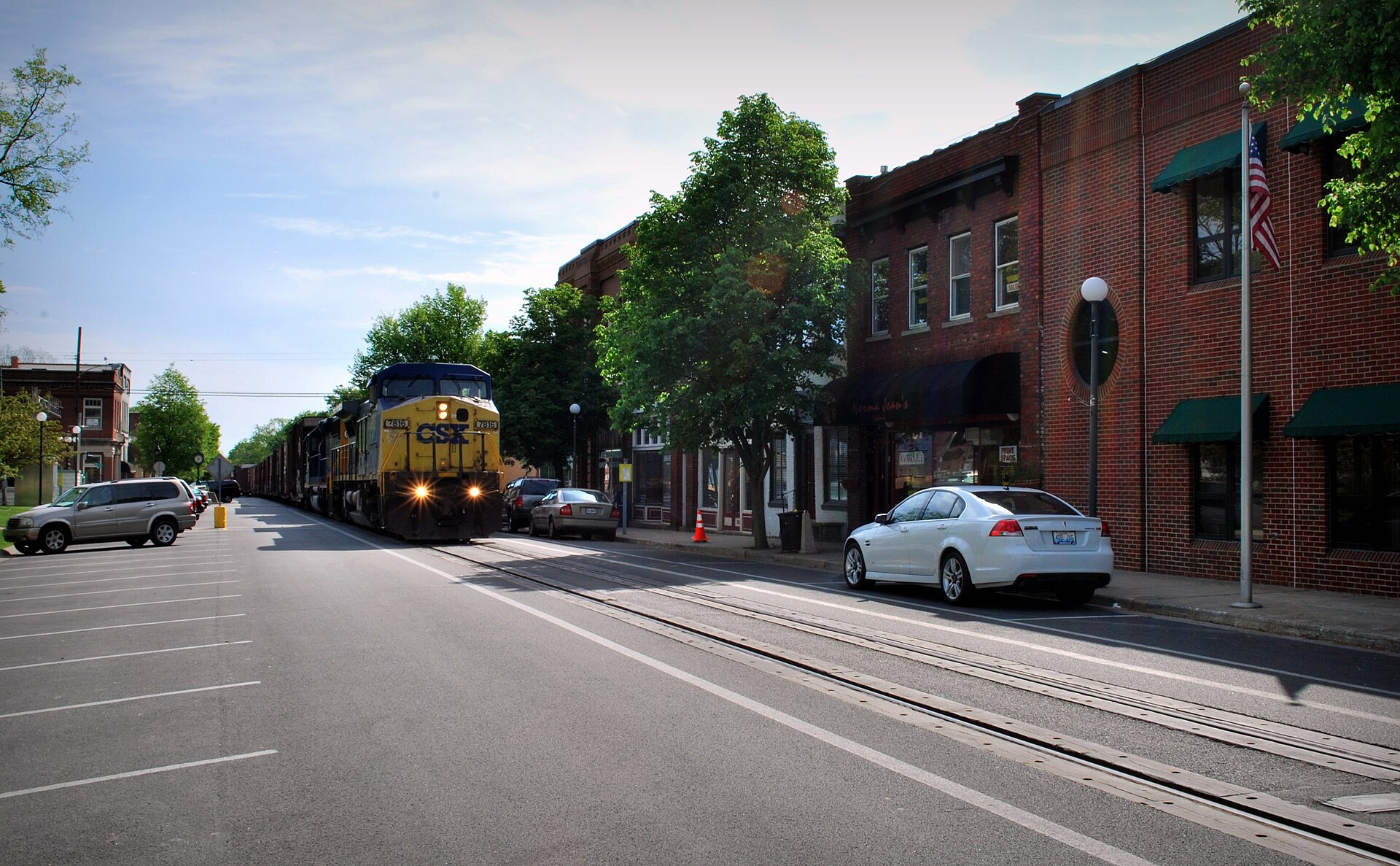
The city also serves as Oldham County's county seat and a residential community beyond the visitor district. For buyers, the important distinction is between living close to the historic center and choosing a property farther out in the wider La Grange area. The train, street pattern, lot, utilities, and route to daily destinations can affect those choices in different ways.
Homes & everyday life
in La Grange.
For a downtown-oriented search, consider the connection to Main Street and the square. Compare that with other residential and outlying settings according to parking, land, maintenance, and everyday travel.
Look a little closer.
Visit a downtown property at different times to understand rail and visitor activity. For any home, inspect condition and drainage and confirm the approvals or restrictions relevant to proposed changes.
Tina’s Green Tree home search.
Opens in a new tab.
Get your bearings
Begin around Main Street and the courthouse square. The Oldham County History Center at 106 North Second Avenue lies west of the square, while the La Grange Railroad Museum at 412 East Main Street provides another anchor for a downtown visit.
The compact center is suited to combining several stops, but the wider housing search area is much larger. Verify whether a property is inside city limits rather than assuming every La Grange mailing address receives the same municipal services. City of La Grange, History Center, Railroad Museum
Sights to see and things to do
Walk Main Street and watch from designated areas
Allow time to browse downtown shops, look at the storefront architecture, and choose a place for a meal. The rail corridor is part of the setting, but the shops and businesses provide reasons to stay beyond a train's passage.
Use designated observation areas and remain clear of tracks and railroad equipment. Follow crossing signals and directions even when a train appears slow. Freight movements can also interrupt driving routes, so leave flexibility in the day's schedule. Downtown visitor information
Explore the La Grange Railroad Museum
The museum at 412 East Main Street has indoor exhibits, outdoor equipment, and an observation deck. The tourism office highlights a historic dining car, caboose, steam locomotive, and model layouts.
Confirm current opening hours and access to individual exhibits before visiting. A museum admission or equipment display should not be confused with a ticket to ride the freight trains running through downtown. If arranging a group visit or private event, contact the museum in advance. Railroad Museum visitor information
Spend time at the Oldham County History Center
The center at 106 North Second Avenue offers exhibits on local history, including slavery and freedom seeking, military experiences, and other aspects of Oldham County life. Its archives provide a separate resource for family and historical research.
For research, an appointment is encouraged. For a general museum visit, check the current schedule and seasonal closure notices. Some older pages contain dated holiday calendars, so confirm unusual dates directly instead of assuming an old notice applies to the current year. Museum and visitor information
Check Springs Park's calendar
Springs Park provides pavilion space and a setting for community activities. The city's current recreation calendar lists farmers markets and seasonal events there, including several October 2026 dates.
At the research date, the calendar lists a farmers market on October 17, 2026, from 9 a.m. to 1 p.m. Later visits should use the updated schedule rather than treating that date as a permanent operating pattern. Pavilion reservations are handled separately from ordinary park access. Springs Park calendar and reservations
Add a quieter park stop
Raymond and Irene Wilborn Park, 299 Lakeshore Drive, is another city park listed as open from dawn to dusk. Its pavilion can be reserved through the city's recreation system.
It offers a separate destination from the downtown museum and shopping stops. Check the facility page and any notices before planning a gathering, especially if a reserved pavilion is important to the visit. Wilborn Park
Homes and real estate
Start with the setting you want
If your interest centers on downtown, examine how a property connects to Main Street, the square, and nearby businesses. Look at sidewalks, crossings, parking, and the actual distance you would walk. A listing described as near downtown may still involve a route that works better by car.
For properties farther out, compare subdivision streets with more dispersed settings on their own terms. Establish the municipality, lot boundaries, utility service, and maintenance obligations instead of carrying assumptions from an in-town property to a larger parcel.
Include rail activity in your evaluation
The trains that make downtown memorable also affect sound, vibration, crossings, and timing for nearby residents. Visit a property at different times and ask about the routes you would use when a train occupies a crossing.
Distance from the track alone does not fully describe the experience. Building construction, window condition, topography, and the orientation of outdoor spaces can all affect how activity is perceived. Evaluate the actual home rather than deciding from a map or a brief showing.
Inspect older buildings and later alterations carefully
For a historic or older house, review roof condition, masonry, foundation, moisture, electrical service, and major renovations. Determine whether additions were permitted and whether finished space functions as comfortably as the square-footage figure suggests.
If a property is within a historic district or has specific restrictions, verify the review process before planning exterior alterations. Residential use, business use, and short-term rental permission are separate questions requiring confirmation for the address.
Verify schools, utilities, and current value
Check school assignment directly for the parcel and current school year. For properties beyond the urban center, establish whether water and wastewater service are public or private and obtain the relevant inspections and records.
Use recent comparable sales with similar condition, location, lot, and ownership form. This guide does not supply a current median price or imply that every property with a La Grange address belongs to one uniform market.
A useful first visit
Choose a day when both museums are open, explore Main Street between the stops, and allow for an unscheduled train passage. Add Springs Park when a market or event aligns with your trip.
For a housing search, make a second visit focused on the property and everyday routes. Seeing the town as a visitor is a useful introduction; experiencing the block, crossings, and services at ordinary times is what makes the decision more practical.
Before you make a move.
Schools, ownership costs, and the questions to bring to a home tour.
Where should I start a home search in La Grange?
For a downtown-oriented search, consider the connection to Main Street and the square. Compare that with other residential and outlying settings according to parking, land, maintenance, and everyday travel. Start by choosing which of those priorities matters most, then compare properties with similar condition, setting, and ownership responsibilities.
How do I check the schools for a particular home?
Check the district’s current street lists for the full address, including house-number ranges. Confirm elementary, middle, and high school assignments separately, and ask Pupil Personnel about any unresolved address or future school year.
Oldham County school assignmentsHow should I compare prices and monthly costs?
Ask Tina for recent comparable sales matched to the home’s location, condition, size, and land. For monthly planning, include taxes, insurance, and any association fees alongside the mortgage, then allow for utilities, repairs, and ongoing maintenance. Obtain estimates for the property you are considering.
CFPB guide to ownership costsWhat should I do during a first property visit?
Visit a downtown property at different times to understand rail and visitor activity. For any home, inspect condition and drainage and confirm the approvals or restrictions relevant to proposed changes. Also make the trips you would repeat during a normal week, at the times you would use them. The suggested first visit in this guide introduces local places; a home tour should test your everyday routine too.
Can I make changes after buying?
Before budgeting for an addition, exterior renovation, outbuilding, or different use, identify the property’s jurisdiction and ask the responsible planning office about the project. Review recorded restrictions and association documents where applicable. For an older home, also establish whether historic-district review applies.
A few places to compare.
Explore another community, then talk with Tina about how the homes and daily routines fit your plans.
Follow along.
Local listings, market updates, and open houses.