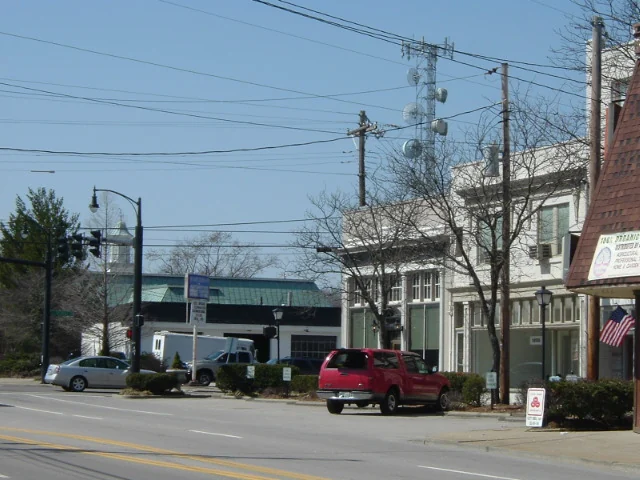
Its appeal is the combination of those different settings. You can spend a morning looking at local history, make practical shopping stops, and explore neighborhoods built in different decades without assuming they all offer the same experience. For real estate, that variety makes street-level comparisons especially useful.
Homes & everyday life
in Jeffersontown.
Separate the incorporated city, the broader J-town label, and the specific subdivision. A property near the older center and one in a later residential area can offer very different routines.
Look a little closer.
Confirm city boundaries, services, association obligations, and the intended school assignment. Test work and errand routes from the address, including the local part of a highway trip.
Tina’s Green Tree home search.
Opens in a new tab.
Get your bearings
Watterson Trail and Taylorsville Road are central reference points. The historic square is the place to begin if you want to understand the community's identity. The museum and library share an address at 10635 Watterson Trail, making them a convenient starting point for a research-oriented visit. Jeffersontown Historical Museum
The city's history also emphasizes the role of Hurstbourne Lane, I-64, and the Bluegrass Industrial Park in later growth. Those employment and transportation connections explain why the broader community feels much larger than its original town center. Historic employment totals on the city history page describe earlier decades; they should not be treated as current statistics. City history
Sights to see and things to do
Explore the historic square
Allow time to look at the building fronts, lamps, and street pattern around Watterson Trail. A short walk is more revealing than a drive through the intersection. The center's scale and storefront arrangement show the older town beneath the larger suburban community.
Check individual businesses before making a special trip. A restaurant or shop visit works well as part of a neighborhood exploration, but the mix of tenants changes and should not be treated as a permanent feature of any particular listing.
Visit the Jeffersontown Historical Museum
The museum offers local artifacts and exhibits at 10635 Watterson Trail. At the research date, the city listed free admission and weekday hours, with a veterans-themed exhibition for the nation's 250th anniversary. Exhibits and schedules can change, so confirm before visiting. Museum visitor information
The museum is especially useful because Jeffersontown's story includes rural commerce, transportation, suburban growth, and employment development. It provides context that a simple description of “historic charm” leaves out.
Look for the Gaslight trail connections
The city's Gaslight Recreational, Workplace and Pedestrian Trail System is intended to connect living, working, and recreation. Its official description identifies multi-use routes for walking, jogging, cycling, and skating.
Use the current map of completed segments when planning a route. The city describes the eventual system length as a completion goal; that does not mean every proposed connection is already available as one continuous trail. Trail system and current map
Use civic programs to get beyond a first impression
The city maintains parks and recreation services, senior programs, and a historical society. Their calendars are useful ways to see how the community functions outside a major annual festival. The historical society's preservation work has included artifacts, historical markers, and newspaper records. City departments, Historical Society
Real estate and things to know
Start by separating the incorporated city, the broader J-town name used in listings, and an individual subdivision. Those descriptions are related but not interchangeable. Confirm whether a property lies inside city limits and which taxes, services, permits, and ordinances apply to that parcel. The city provides departments specifically responsible for planning, building, code enforcement, and revenue. Municipal services
Housing comparisons should account for construction period, renovation quality, lot size, and access to commercial roads. A property near the old center can have a different layout and maintenance profile from a later subdivision home. An updated kitchen does not establish the condition of a roof, drainage system, electrical service, or foundation.
The employment landscape matters too. Visit a prospective address during the times you would normally leave and return. Pay attention to truck routes, intersections, driveway access, and the distance to the particular workplace involved. “Close to the industrial park” can mean different things depending on which entrance or business you actually need.
For walking and cycling, trace the complete route to your intended destination. A trail segment or sidewalk near a house is useful, but a missing crossing or disconnected section can change how practical it is. Use the city's completed trail map alongside an on-site visit.
Check any association documents for dues, exterior changes, parking, rentals, and common-area responsibilities. Verify school assignments with the district for the exact address. For price comparisons, use recent sales of similar properties within the relevant market area; a single figure for all of Jeffersontown would hide meaningful differences.
A useful first visit
Begin with the square and museum, add a walk on a confirmed trail segment, and then drive the residential areas that match your housing needs. Finish by testing an ordinary errand and your likely work route. This gives you a practical view of Jeffersontown's older center, public amenities, and larger suburban setting in the same visit.
Before you make a move.
Schools, ownership costs, and the questions to bring to a home tour.
Where should I start a home search in Jeffersontown?
Separate the incorporated city, the broader J-town label, and the specific subdivision. A property near the older center and one in a later residential area can offer very different routines. Start by choosing which of those priorities matters most, then compare properties with similar condition, setting, and ownership responsibilities.
How do I check the schools for a particular home?
Use the exact address to identify the responsible district, then confirm the school for each grade and the year you plan to enroll. A nearby school or a community name in a listing is not an attendance assignment. Ask the district about enrollment and transportation for your situation.
JCPS School FinderHow should I compare prices and monthly costs?
Ask Tina for recent comparable sales matched to the home’s location, condition, size, and land. For monthly planning, include taxes, insurance, and any association fees alongside the mortgage, then allow for utilities, repairs, and ongoing maintenance. Obtain estimates for the property you are considering.
CFPB guide to ownership costsWhat should I do during a first property visit?
Confirm city boundaries, services, association obligations, and the intended school assignment. Test work and errand routes from the address, including the local part of a highway trip. Also make the trips you would repeat during a normal week, at the times you would use them. The suggested first visit in this guide introduces local places; a home tour should test your everyday routine too.
Can I make changes after buying?
Before budgeting for an addition, exterior renovation, outbuilding, or different use, identify the property’s jurisdiction and ask the responsible planning office about the project. Review recorded restrictions and association documents where applicable. For an older home, also establish whether historic-district review applies.
A few places to compare.
Explore another community, then talk with Tina about how the homes and daily routines fit your plans.
Follow along.
Local listings, market updates, and open houses.