This is a place for a modest, attentive visit rather than a packed itinerary of major attractions. Its appeal lies in the stories behind ordinary-looking places and the relationship between the older town and its rural surroundings.
Homes & everyday life
in Greenville.
A home near U.S. 150, a subdivision property, and a larger rural parcel offer different relationships to traffic, services, and outdoor upkeep. Compare each within its own setting.
Look a little closer.
For an older building, ask which preservation requirements apply to the parcel. For acreage, check usable ground, drainage, utilities, and access rather than comparing land area alone.
Tina’s Green Tree home search.
Opens in a new tab.
Get your bearings
Use Greenville, Floyd County, Indiana when searching; results for much larger Greenvilles in other states can easily intrude. U.S. 150 is the main corridor, while Greenville Park is on Buttontown Road.
The town's website emphasizes historic preservation and community events. It is a useful starting point for local contacts, but some featured event notices are several years old. Use dated announcements for current plans. Town website
Sights and places to know
1. John B. Ford historical marker
Location: 9849 U.S. 150, at the First Harrison Bank property.
The marker is a concise introduction to Ford's life and the town's industrial connection. Read both sides: one establishes his Greenville and steamboat years, while the other follows the glass industry and his later support for the community.
It makes a useful first stop before looking at the Station Building area and Simpson Memorial church. Marker location and text
2. The Station Building
Location: Historic U.S. 150 corridor in Greenville.
The Station Building appears repeatedly in the town's photo collection, including a view identified as Walt Ollis' store around 1925 and another from Indiana's 2016 bicentennial torch relay.
Look at it as a surviving commercial landmark with a long, changing life. The town's preservation materials make it a research priority, but do not establish a regular public-tour program. Treat any current business or private space according to its posted access. Historical images, Preservation plan
3. Simpson Memorial church
Address: 9449 Harrison Street.
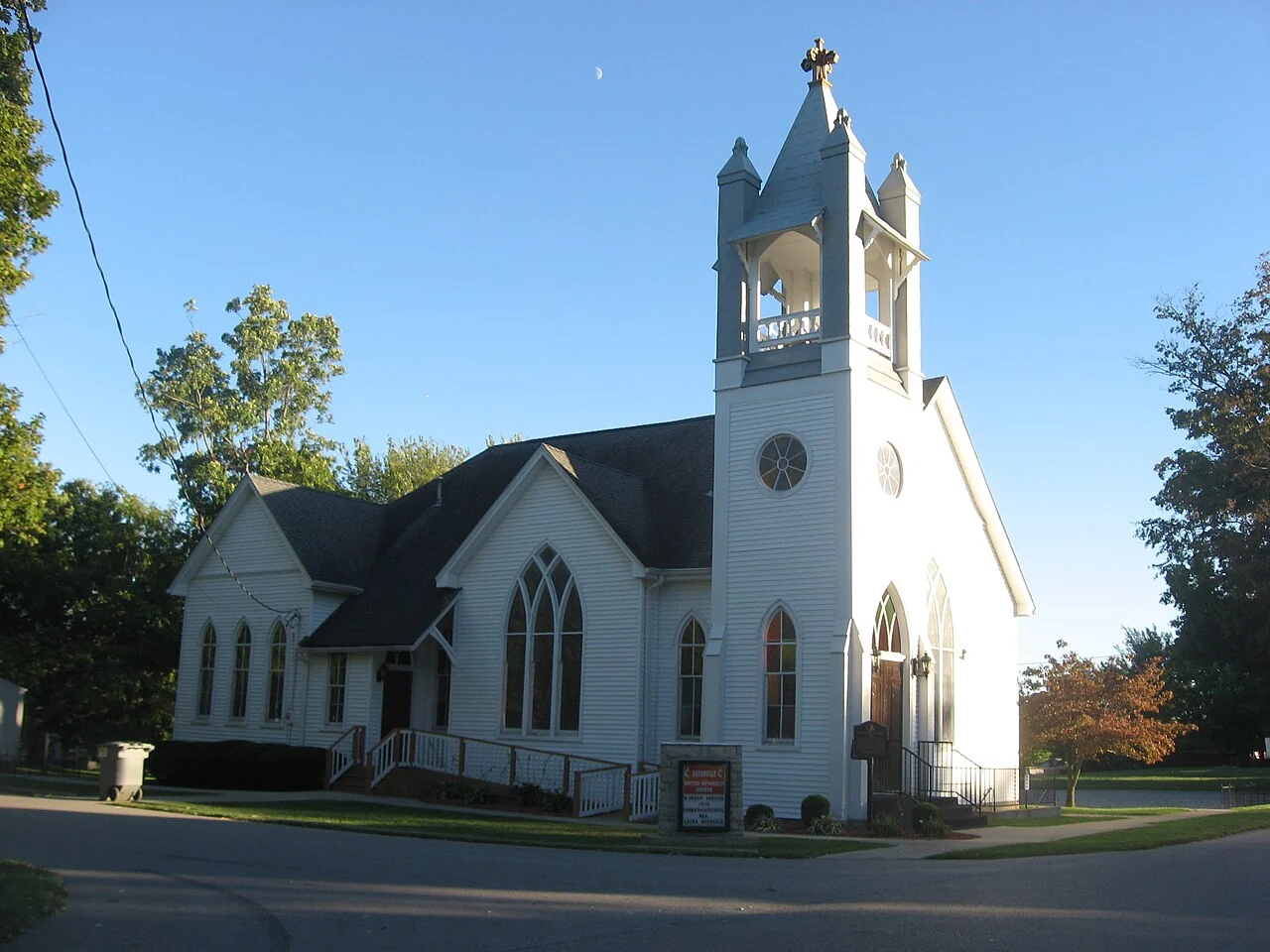
The National Register record identifies the 1899 building's architectural significance and credits Benjamin D. Price and Captain John Nafius. Its Gothic character makes it an especially worthwhile exterior stop for someone interested in small-town church architecture.
The Methodist heritage account notes that it survived the 1908 fire that devastated much of Greenville. That survival gives the building a role in the town's story beyond its religious use. Any interior visit should be arranged with the congregation. National Register record, Methodist heritage account
4. Norman J. Colman marker
Location: In front of Greenville Elementary School.
This marker provides a second national connection, through education and agriculture. The town's online dedication page is a useful companion to the physical marker and explains why the school setting was chosen.
Visit in a way that respects school operations and access requirements. It is a short historical stop, not an invitation to enter school buildings. Colman marker
5. Greenville Park
Address: 6455 Buttontown Road.
The 14-acre park includes softball fields, a basketball court, a picnic shelter, restrooms, playground equipment, and a three-quarter-mile walking path. It offers a straightforward way to spend time outside without organizing a longer rural excursion.
The basketball court is marked for pickleball, but the county says players need to bring their own net. That small practical detail matters more than a generic claim that the park “has pickleball.” County park information
6. The town's historical photo collection
Available online through the town website.
Browse the images before or after visiting. The collection includes local businesses, churches, Ford family material, fire photographs, and civic milestones. Comparing an old image with the present view can reveal changes in building height, storefront use, and the surrounding streets.
This is particularly helpful in a small community where important stories are not all presented in a staffed museum. History in pictures
Events and community life
Greenville highlights Halloween activities, Christmas light displays, and its community yard sale as parts of local life. These are opportunities to experience the town as a gathering place rather than simply a set of historic sites.
Confirm the current year's announcement. The homepage's prominently featured yard-sale notice is dated 2024, so its specific date should not be reused as a current event listing. Town events and news
The Historic Preservation Commission also invites residents to share photographs, documents, and artifacts. That ongoing work is part of what makes the town's history accessible. Preservation Commission
Neighborhood and real estate things to know
Greenville's town center and surrounding rural addresses should be evaluated separately. An established house near U.S. 150, a subdivision home, and a larger rural parcel offer different relationships to traffic, services, neighboring land, and maintenance.
For older property, investigate condition and proposed work early. Greenville has an active preservation commission, but a building's historic appearance alone does not tell you which protections or review requirements apply. Ask about the specific parcel and project. Local preservation resources
For a rural setting, determine usable acreage, drainage, road access, water and wastewater service, and internet availability. For a town or subdivision setting, check sidewalks, association obligations where applicable, and the actual trip to daily services.
Visit at the times you would normally be home and traveling. U.S. 150 is part of Greenville's identity and access, but properties can relate to the corridor quite differently. School assignments and commute times should be checked by address.
This guide does not use an unsupported median price or appreciation claim. A useful market comparison needs recent sales matched to the property's location, condition, size, and land.
A good first visit
Read the Ford marker, look at the older commercial corridor, and see Simpson Memorial's exterior. Add the Colman marker when school access permits, then walk Greenville Park. Use the town's photo archive to connect what you saw with earlier versions of the community.
Before you make a move.
Schools, ownership costs, and the questions to bring to a home tour.
Where should I start a home search in Greenville?
A home near U.S. 150, a subdivision property, and a larger rural parcel offer different relationships to traffic, services, and outdoor upkeep. Compare each within its own setting. Start by choosing which of those priorities matters most, then compare properties with similar condition, setting, and ownership responsibilities.
How do I check the schools for a particular home?
Use the exact address to identify the responsible district, then confirm the school for each grade and the year you plan to enroll. A nearby school or a community name in a listing is not an attendance assignment. Ask the district about enrollment and transportation for your situation.
Indiana Department of Education school directoryHow should I compare prices and monthly costs?
Ask Tina for recent comparable sales matched to the home’s location, condition, size, and land. For monthly planning, include taxes, insurance, and any association fees alongside the mortgage, then allow for utilities, repairs, and ongoing maintenance. Obtain estimates for the property you are considering.
CFPB guide to ownership costsWhat should I do during a first property visit?
For an older building, ask which preservation requirements apply to the parcel. For acreage, check usable ground, drainage, utilities, and access rather than comparing land area alone. Also make the trips you would repeat during a normal week, at the times you would use them. The suggested first visit in this guide introduces local places; a home tour should test your everyday routine too.
Can I make changes after buying?
Before budgeting for an addition, exterior renovation, outbuilding, or different use, identify the property’s jurisdiction and ask the responsible planning office about the project. Review recorded restrictions and association documents where applicable. For an older home, also establish whether historic-district review applies.
A few places to compare.
Explore another community, then talk with Tina about how the homes and daily routines fit your plans.
Follow along.
Local listings, market updates, and open houses.